


 CorLab AI Agent

Welcome to your Personal Assistant
This Tech Assistant is designed to support you with clear insights into our company, our work, our services and the people behind our progress.
Powered by CorLab Tech © 2025
Top Custom Software Development Companies
The top custom software development companies are good at different things. A team that builds a startup's first version fast can be the wrong pick for a large company's core systems or for software that handles health data. This list sorts nine companies by the buyer each one suits, with the same facts for each, checked on November 3, 2026.
How this list was built
All nine companies are reviewed on Clutch, a site where clients rate the software vendors they hired. Clutch checks that each reviewer is a real client. On November 3, 2026, every company here passed four rules:
- Custom software makes up at least 10% of its work, according to the service breakdown on its Clutch profile.
- It has a public Clutch profile with verified reviews.
- It shows case studies on its own website.
- It builds software for clients. Companies that sell their own product, run a freelancer marketplace or only rent out developers don't qualify.
Every company gets the same facts from the same places. Team size, rating, number of reviews, newest review, minimum project and where the engineers work all come from Clutch. The US office and any security certification come from the company's own website. A certification such as ISO 27001 or SOC 2 means an outside auditor has checked how the company protects client data.
Why group the top custom software development companies instead of ranking them? A ranking assumes every buyer wants the same thing. A $25,000 first version needs speed and a small senior team. A multi-year project tied into a company's existing systems needs strong process and a lot of people. Inside each group, companies appear in alphabetical order.
Each entry ends with a "falls short" line. It names the complaint that comes up most often in the company's Clutch reviews. It also flags any of four limits: no review in the last 12 months, fewer than 10 reviews, fewer than 50 people or no security certification listed on its website. I hold my own work to the same habit. My build log for a reporting platform for data that can't go to the cloud ends with what the product still lacks: "Also missing: more database connectors, a published evaluation harness, and any certification."
Comparison table
The table shows the four things most buyers check first: who each company suits, the smallest project it accepts, its Clutch rating and where its engineers work. Each profile below adds the rest: US office, team size and security certification. Hourly rates are left out on purpose, because a rate says little about what the finished project will cost.
Company | Best for | Min. project | Clutch rating (reviews) | Where engineers work |
| Rootstrap | Funded first version, US hours | $50,000+ | 4.8 (44) | Latin America |
| Uptech | Web and mobile first version from one team | $25,000+ | 4.9 (45) | Central and Eastern Europe |
| Azumo | Adding AI or data features | $10,000+ | 4.9 (27) | Latin America |
| Monterail | Long-term web and mobile team | $10,000+ | 4.8 (64) | Central and Eastern Europe |
| BairesDev | Extra engineers for large companies | $50,000+ | 4.9 (63) | Latin America |
| Itransition | Software that fits existing business systems | $25,000+ | 4.9 (42) | Europe and Central Asia |
| Blackthorn Vision | Microsoft-based products in biotech and energy | $50,000+ | 4.8 (24) | Central and Eastern Europe |
| CorLab Tech | Data-heavy healthcare and logistics | $10,000+ | 4.9 (4) | Eastern Europe/USA |
| Softeq | Smart devices, from hardware to app | $50,000+ | 4.9 (27) | Europe and Mexico |
Clutch data checked November 3, 2026. Minimum project is the smallest budget each company accepts on Clutch.
Companies by project type
The four groups follow the buyer's situation: a founder testing an idea, a product company that has outgrown its first team, a large company adding software to the systems it already runs, and a team whose data is regulated or unusually complex. There is no single best software development company for everyone, so start with the group that matches yours.
Startup MVP
An MVP, or minimum viable product, is the first version of a product: just enough to test the idea with real users. An MVP buyer needs a small senior team that can cut what isn't needed, ship within months and hand over code the startup's own developers can keep working on. Our guide to building a successful first version covers what an MVP should prove before it grows.
Rootstrap
US office: Beverly Hills
Team size: 250–999
Security certification: SOC 2
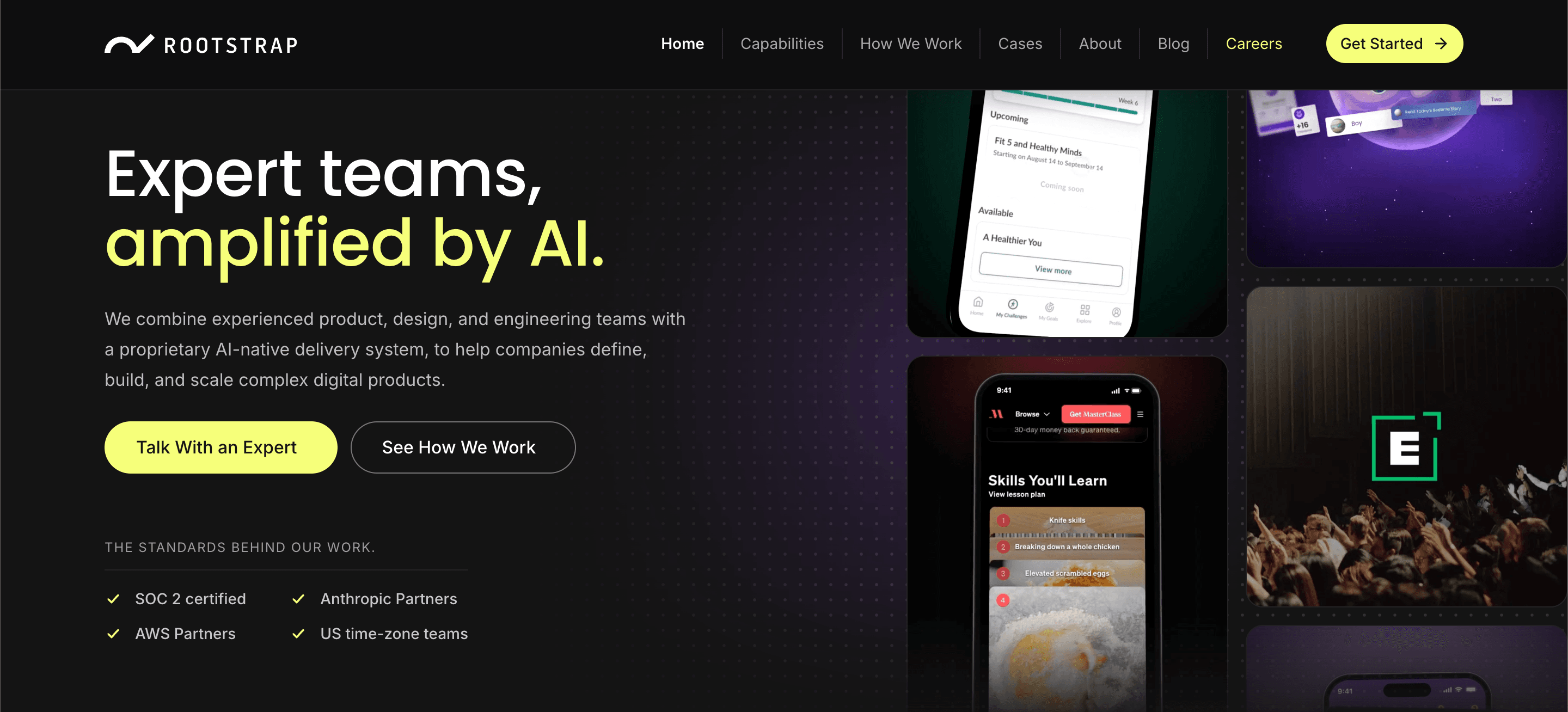
Rootstrap builds web and mobile apps and AI features. On its Clutch profile, custom software and AI work make up 30% each.
Two verified reviews show how it works with early-stage startups. Universe Innovations had Rootstrap design and build its MVP in under three months, and the founder expects that MVP to help raise a seed round. Backbone, a startup that automates email strategy, got an MVP with five algorithms running behind it, delivered within budget.
Best for: a US founder with funding and an MVP budget of $50,000 or more, who wants design and engineering from one team working US hours.
Falls short: clients on Clutch ask for lower prices, and the newest review on its profile is from August 2024.
Uptech
US office: Los Angeles
Team size: 50–249
Security certification: ISO 27001
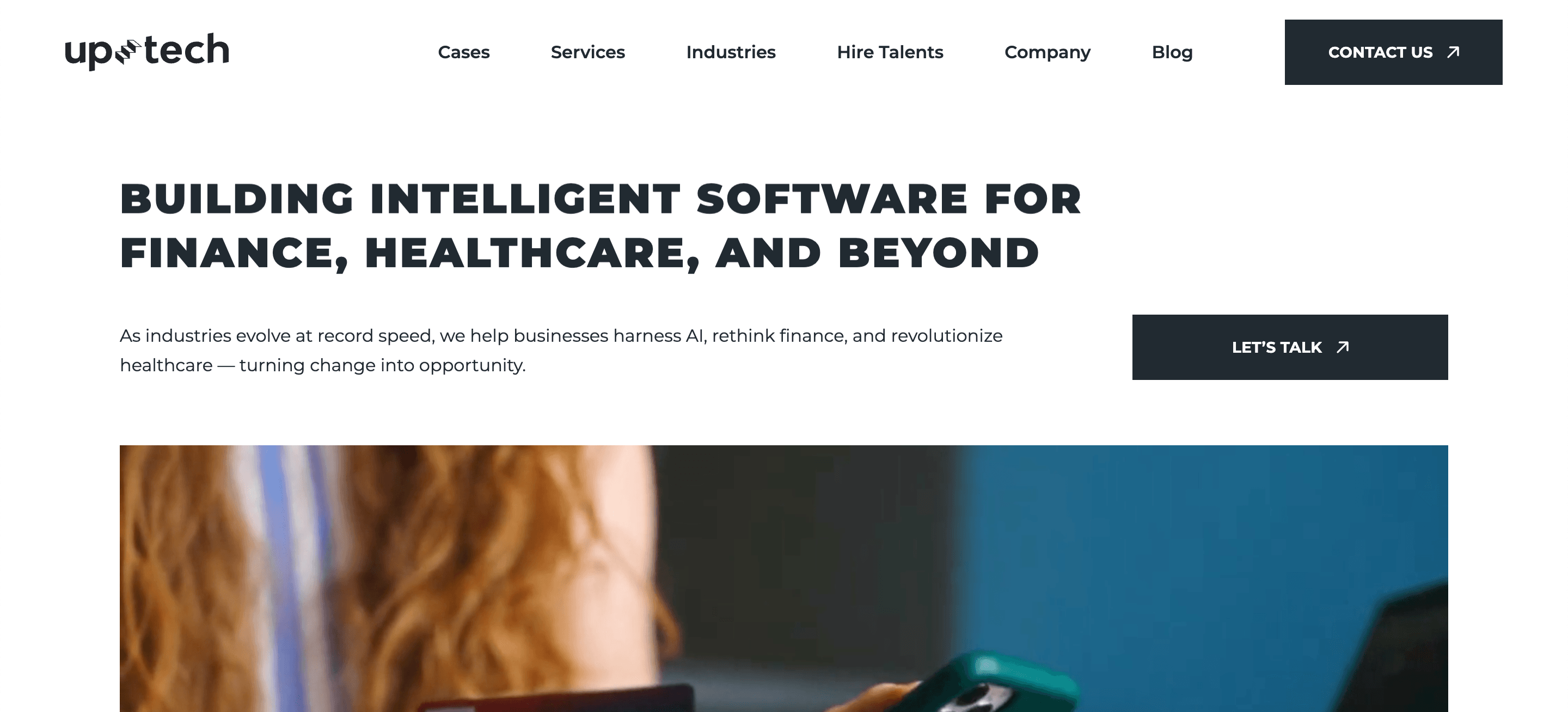
Uptech designs and builds web and mobile apps for startups and larger companies, with finance and healthcare as its main focus. Custom software is 30% of its work on Clutch.
Its reviews show complete products built from the ground up. Patch Systems, a financial services company, uses Uptech for all of its engineering, and a 15-person team launched its website and its iPhone and Android apps. MyCHDMap had a 10-person team build a platform that turns congenital heart disease data into visuals, from the design to the code behind it.
Best for: a startup in its first funding rounds that wants research, design and apps for several platforms from one company, starting at $25,000.
Falls short: Clutch's review summary mentions time-zone and cultural friction for some clients, and one reviewer says the company was slow to replace a front-end developer who wasn't working out.
Product scale-up
A scale-up already has a product and users. The vendor's job is no longer to prove an idea. It's to add to the existing code without breaking what already works. That calls for stable teams, long partnerships and a company willing to take over code someone else wrote.
Azumo
US office: San Francisco
Team size: 50–249
Security certification: SOC 2
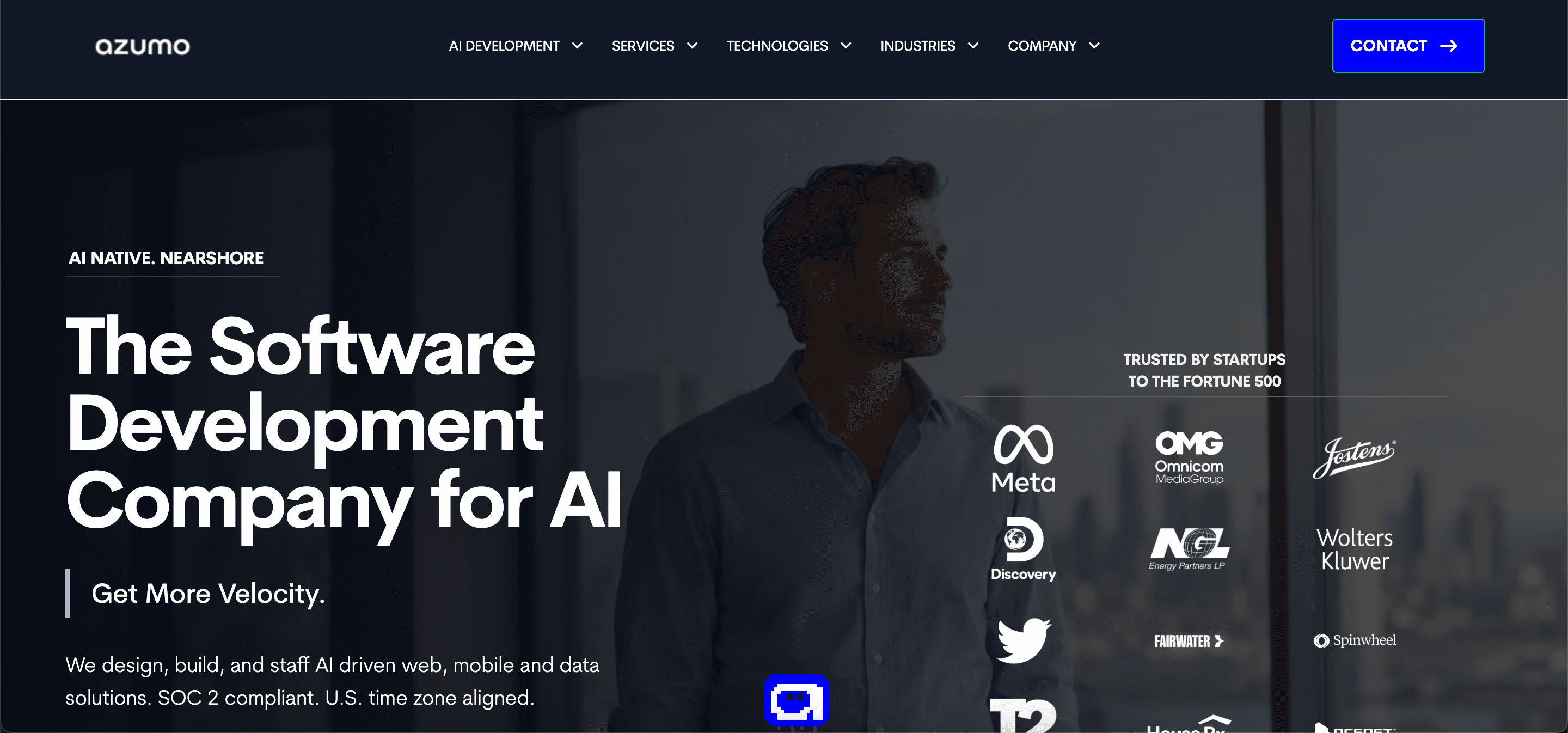
Azumo builds AI tools, data systems and web and mobile apps. Its Clutch profile leans toward AI, which makes up 35% of its work, with custom software at 20%.
Its reviews show projects built around data. Fairwater, a shipping company, had Azumo build a reporting platform for its vessels that catches mistakes as crews enter information, then moved its whole 41-ship fleet onto it within six months. RollCall, a pediatric therapy business, had Azumo build HR and attendance software from scratch and is now in its second phase of work.
Best for: a product company that wants an AI feature or a data-heavy part of its product, built by a team working US hours, with projects from $10,000.
Falls short: keeping the same people on a project. The Fairwater review and Clutch's summary both mention strong team members leaving partway through.
Monterail
US office: Chicago
Team size: 50–249
Security certification: none listed
Monterail builds web and mobile apps for large companies, startups and scale-ups, with health, finance and real estate among its main industries. It has long experience with Vue.js and Ruby on Rails, two popular tools for building web apps. Custom software is 20% of its work on Clutch.
Its reviews describe long partnerships. CAPinside, a German financial services company, has worked with Monterail since March 2020 on more than 50 projects, from upkeep to new features. Bookinghost, which manages about 1,800 short-term rental apartments, had it build an AI pricing tool that connects to outside systems.
Best for: a scale-up that needs a European team to take over or grow a web and mobile product for years, not months.
Falls short: Clutch's summary says some clients wanted tighter budget control, and a 2026 reviewer says the final cost of her MVP came in higher than she expected. Its website lists no security certification.
Enterprise scale
Large companies rarely start from a blank page. New software has to work with the systems they already run: an ERP for operations and finance, a CRM for customer records and one shared login for staff. The vendor also has to supply more people than a 50-person firm can. Size helps here, but it brings process that can slow down urgent work.
BairesDev
US office: San Francisco
Team size: 1,000–9,999
Security certification: ISO 27001
BairesDev provides engineers in three ways: developers who join the client's own team, full dedicated teams and complete projects. Custom software is 10% of its work on Clutch, the same as testing and mobile, while adding developers to client teams and AI make up 15% each. So read its reviews, not just its rating.
Its reviews show both ways of working. Freeplay, a startup that builds tools for AI developers, had a BairesDev team build its MVP, from the screens users see to the server code and the connections to several AI providers. The Associated Press has worked with BairesDev since 2014 on improvements to its Salesforce setup and support for an older in-house customer system.
Best for: a large company with its own engineering leaders that needs several senior engineers working US hours within weeks, with projects from $50,000.
Falls short: Clutch's summary notes occasional communication gaps on technical topics, and one review describes a lot of developer turnover early in the project.
Itransition
US office: Decatur
Team size: 1,000–9,999
Security certification: ISO 27001
Itransition does software development and IT consulting. Its Clutch profile shows where most of the work goes: ERP consulting at 20%, and CRM and custom software at 15% each. It specializes in Microsoft Dynamics 365 and Power Platform, Microsoft's business software, which shapes the custom work it takes on.
Its reviews show long, large projects. An auto finance platform has worked with Itransition since November 2016 and now serves more than 7,000 car dealership locations. A travel agency reports just one live problem across six years and hundreds of software releases.
Best for: a large company whose custom software has to work alongside Dynamics, Salesforce or another ERP, with projects from $25,000.
Falls short: clients mention written documents that need proofreading, and the auto finance reviewer says the step-by-step delivery process felt slow when priorities changed quickly.
Regulated and data-heavy
Regulated and data-heavy software breaks in ways a demo never shows. A lab system sends a message in the wrong format. A log can't say who opened a patient record. A device and its app disagree about what just happened. Small and mid-size specialists often do well here, because the senior people who plan the system usually build it too.
Blackthorn Vision
US office: none listed
Team size: 50–249
Security certification: ISO 27001
Blackthorn Vision builds and updates products on Microsoft technology, mainly .NET and the Azure cloud, for healthcare, biotech, energy and business software companies. Custom software is 40% of its work on Clutch.
Its reviews show work in regulated fields. Berkeley Lights, a biotech company, says Blackthorn built almost all of its software for analyzing single cells. Selux Diagnostics had Blackthorn add people to its team in the rush before a June 2021 510(k) submission, the filing the FDA requires before many medical devices can be sold.
Best for: a biotech, diagnostics or energy company that already runs on Microsoft technology, with a budget from $50,000.
Falls short: clients say hiring for new roles is slow, one reviewer advises against handing it a large project to run alone, and the newest review on its profile is from February 2023.
CorLab Tech
US office: Falls Church, Virginia
Team size: 10–49
Security certification: none listed
I'm a co-founder of CorLab Tech, so I placed it by the same rules as every other company on this list.
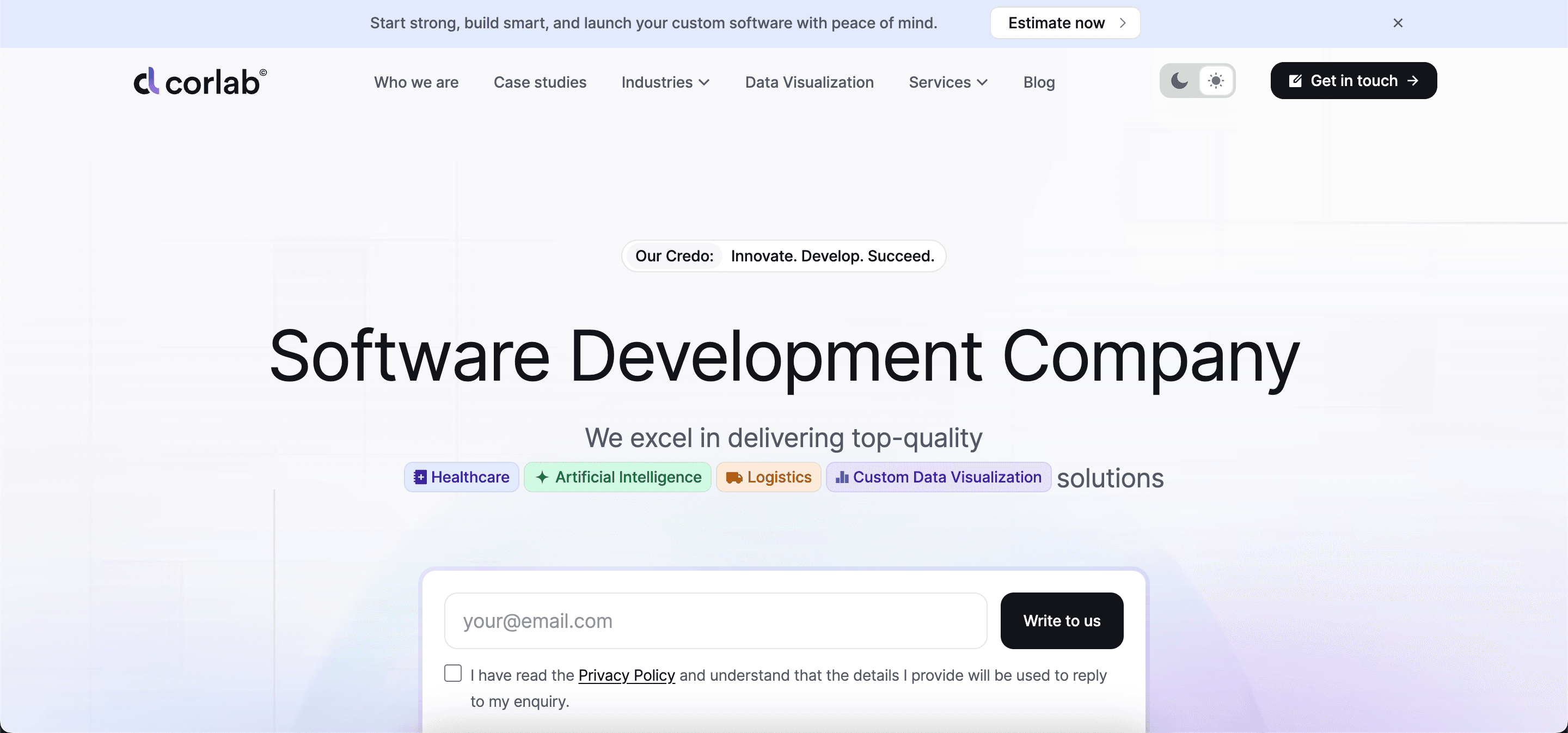
CorLab Tech builds web platforms, mobile apps, custom dashboards and AI features for healthcare software, biotech and logistics. These are products where the hard part is how the data is organized and how it connects to other systems. Custom software development services are 30% of our work on Clutch.
Our verified reviews cover two kinds of work. Cardinal Finance, a mortgage lender, had us build a library of reusable interface building blocks from its approved designs between April and September 2022. A social learning platform had a six-person team, from project manager to tester, design and build its website.
Best for: a healthcare or logistics product where the data and its connections to other systems decide the outcome, with projects from $10,000.
Falls short: one client wanted more ideas from the team on what to improve. Our team is small, at 10 to 49 people, with 4 Clutch reviews, the newest from November 2022, and our website lists no security certification.
Softeq
US office: Houston
Team size: 250–999
Security certification: ISO 27001, ISO 13485 (medical devices), ISO 9001
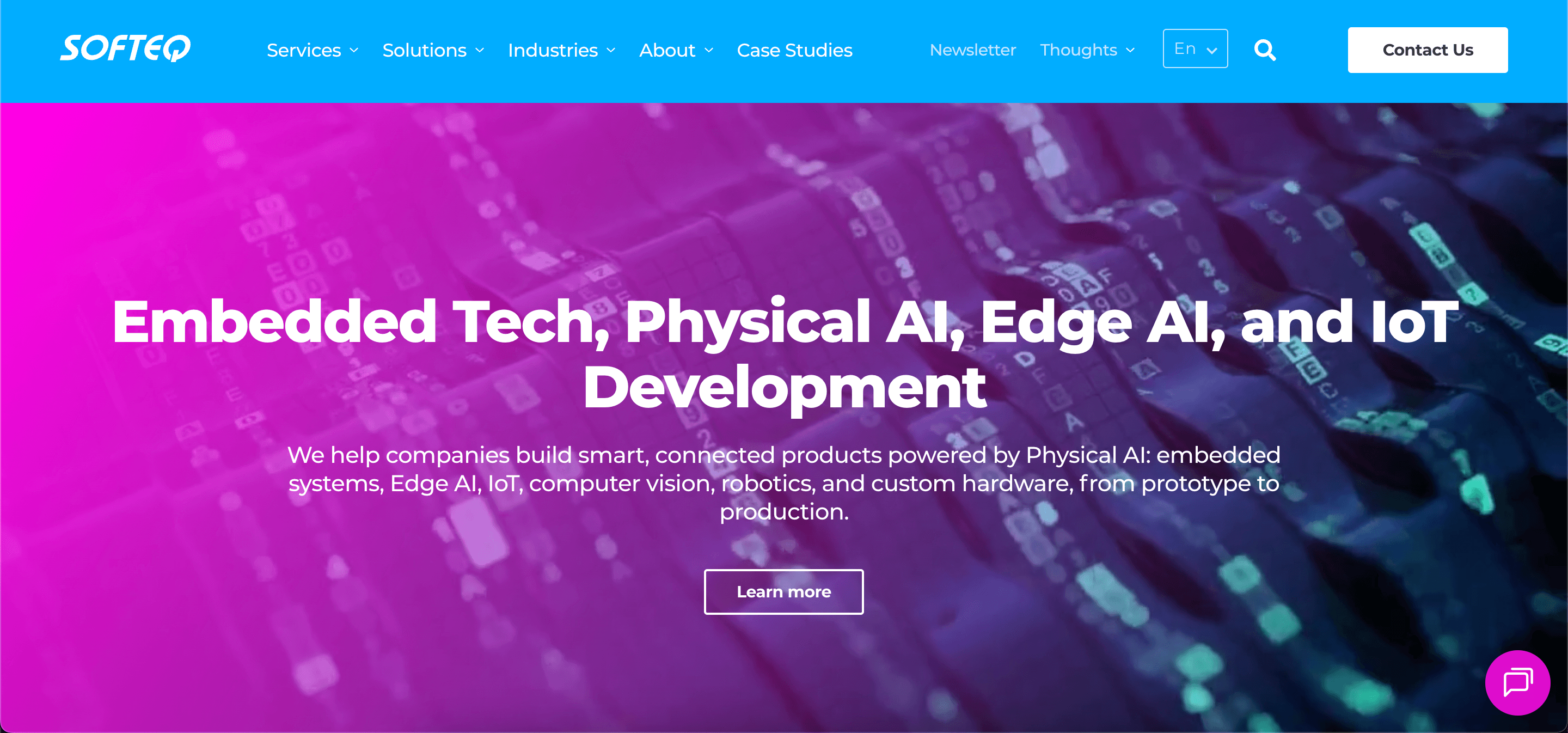
Softeq covers every layer of a connected device: the hardware and circuit boards, the software inside the device, the mobile app and the cloud behind it. On Clutch, connected-device work makes up 35% of its work and custom software 30%.
Its reviews show that range. A pet tech company ran more than 100 two-week work cycles with Softeq, covering its mobile app, its cloud system and the device software that handles Bluetooth, Wi-Fi and cellular connections. A Swiss healthcare startup had Softeq build the MVP of a medication reminder app that connects patients with their pharmacy.
Best for: a company whose product is a connected device, where the device and the cloud have to be built and tested together, with projects from $50,000.
Falls short: one reviewer says progress was slower than hoped, with cost limiting how much the team could grow, and the newest review on its profile is from June 2023.
How to shortlist from this list
Building a shortlist from these top custom software development companies takes three steps. Pick the group that matches you, cut by budget and working hours, then test two or three finalists on your own problem. The first two steps take an afternoon. The third is where you actually decide.
- Start with your group. Look at a second group only if your project sits between two, like a scale-up whose product handles patient data. The best custom software development company for one buyer is an average choice for another, so your group narrows the list more than any rating does.
- Apply your two hard limits. Budget comes first. With $30,000 to spend, Rootstrap, BairesDev, Blackthorn Vision and Softeq are out before the first call. Working hours come second. A team six hours ahead of New York shares about three hours of a 9-to-6 workday, a team seven hours ahead shares about two, and a Latin American team shares almost all of it.
- Test on your own data. In my build log for that reporting platform, I wrote a sentence that applies to vendor ratings too: "Benchmarks are not evidence." A 4.9 rating tells you past clients were happy. It doesn't tell you how a team will handle your data, your other systems or your older code. Give each finalist the same small, paid task using a sample of your real data, and compare what comes back.
Contract terms and the paid trial need more space than a list can give them. Our guide on how to choose a software development company covers both, including why you should own the code from day one.
The top custom software development companies are good at different things. A team that builds a startup's first version fast can be the wrong pick for a large company's core systems or for software that handles health data. This list sorts nine companies by the buyer each one suits, with the same facts for each, checked on November 3, 2026.
How this list was built
All nine companies are reviewed on Clutch, a site where clients rate the software vendors they hired. Clutch checks that each reviewer is a real client. On November 3, 2026, every company here passed four rules:
- Custom software makes up at least 10% of its work, according to the service breakdown on its Clutch profile.
- It has a public Clutch profile with verified reviews.
- It shows case studies on its own website.
- It builds software for clients. Companies that sell their own product, run a freelancer marketplace or only rent out developers don't qualify.
Every company gets the same facts from the same places. Team size, rating, number of reviews, newest review, minimum project and where the engineers work all come from Clutch. The US office and any security certification come from the company's own website. A certification such as ISO 27001 or SOC 2 means an outside auditor has checked how the company protects client data.
Why group the top custom software development companies instead of ranking them? A ranking assumes every buyer wants the same thing. A $25,000 first version needs speed and a small senior team. A multi-year project tied into a company's existing systems needs strong process and a lot of people. Inside each group, companies appear in alphabetical order.
Each entry ends with a "falls short" line. It names the complaint that comes up most often in the company's Clutch reviews. It also flags any of four limits: no review in the last 12 months, fewer than 10 reviews, fewer than 50 people or no security certification listed on its website. I hold my own work to the same habit. My build log for a reporting platform for data that can't go to the cloud ends with what the product still lacks: "Also missing: more database connectors, a published evaluation harness, and any certification."
Comparison table
The table shows the four things most buyers check first: who each company suits, the smallest project it accepts, its Clutch rating and where its engineers work. Each profile below adds the rest: US office, team size and security certification. Hourly rates are left out on purpose, because a rate says little about what the finished project will cost.
Company | Best for | Min. project | Clutch rating (reviews) | Where engineers work |
| Rootstrap | Funded first version, US hours | $50,000+ | 4.8 (44) | Latin America |
| Uptech | Web and mobile first version from one team | $25,000+ | 4.9 (45) | Central and Eastern Europe |
| Azumo | Adding AI or data features | $10,000+ | 4.9 (27) | Latin America |
| Monterail | Long-term web and mobile team | $10,000+ | 4.8 (64) | Central and Eastern Europe |
| BairesDev | Extra engineers for large companies | $50,000+ | 4.9 (63) | Latin America |
| Itransition | Software that fits existing business systems | $25,000+ | 4.9 (42) | Europe and Central Asia |
| Blackthorn Vision | Microsoft-based products in biotech and energy | $50,000+ | 4.8 (24) | Central and Eastern Europe |
| CorLab Tech | Data-heavy healthcare and logistics | $10,000+ | 4.9 (4) | Eastern Europe/USA |
| Softeq | Smart devices, from hardware to app | $50,000+ | 4.9 (27) | Europe and Mexico |
Clutch data checked November 3, 2026. Minimum project is the smallest budget each company accepts on Clutch.
Companies by project type
The four groups follow the buyer's situation: a founder testing an idea, a product company that has outgrown its first team, a large company adding software to the systems it already runs, and a team whose data is regulated or unusually complex. There is no single best software development company for everyone, so start with the group that matches yours.
Startup MVP
An MVP, or minimum viable product, is the first version of a product: just enough to test the idea with real users. An MVP buyer needs a small senior team that can cut what isn't needed, ship within months and hand over code the startup's own developers can keep working on. Our guide to building a successful first version covers what an MVP should prove before it grows.
Rootstrap
US office: Beverly Hills
Team size: 250–999
Security certification: SOC 2
Rootstrap builds web and mobile apps and AI features. On its Clutch profile, custom software and AI work make up 30% each.
Two verified reviews show how it works with early-stage startups. Universe Innovations had Rootstrap design and build its MVP in under three months, and the founder expects that MVP to help raise a seed round. Backbone, a startup that automates email strategy, got an MVP with five algorithms running behind it, delivered within budget.
Best for: a US founder with funding and an MVP budget of $50,000 or more, who wants design and engineering from one team working US hours.
Falls short: clients on Clutch ask for lower prices, and the newest review on its profile is from August 2024.
Uptech
US office: Los Angeles
Team size: 50–249
Security certification: ISO 27001
Uptech designs and builds web and mobile apps for startups and larger companies, with finance and healthcare as its main focus. Custom software is 30% of its work on Clutch.
Its reviews show complete products built from the ground up. Patch Systems, a financial services company, uses Uptech for all of its engineering, and a 15-person team launched its website and its iPhone and Android apps. MyCHDMap had a 10-person team build a platform that turns congenital heart disease data into visuals, from the design to the code behind it.
Best for: a startup in its first funding rounds that wants research, design and apps for several platforms from one company, starting at $25,000.
Falls short: Clutch's review summary mentions time-zone and cultural friction for some clients, and one reviewer says the company was slow to replace a front-end developer who wasn't working out.
Product scale-up
A scale-up already has a product and users. The vendor's job is no longer to prove an idea. It's to add to the existing code without breaking what already works. That calls for stable teams, long partnerships and a company willing to take over code someone else wrote.
Azumo
US office: San Francisco
Team size: 50–249
Security certification: SOC 2
Azumo builds AI tools, data systems and web and mobile apps. Its Clutch profile leans toward AI, which makes up 35% of its work, with custom software at 20%.
Its reviews show projects built around data. Fairwater, a shipping company, had Azumo build a reporting platform for its vessels that catches mistakes as crews enter information, then moved its whole 41-ship fleet onto it within six months. RollCall, a pediatric therapy business, had Azumo build HR and attendance software from scratch and is now in its second phase of work.
Best for: a product company that wants an AI feature or a data-heavy part of its product, built by a team working US hours, with projects from $10,000.
Falls short: keeping the same people on a project. The Fairwater review and Clutch's summary both mention strong team members leaving partway through.
Monterail
US office: Chicago
Team size: 50–249
Security certification: none listed
Monterail builds web and mobile apps for large companies, startups and scale-ups, with health, finance and real estate among its main industries. It has long experience with Vue.js and Ruby on Rails, two popular tools for building web apps. Custom software is 20% of its work on Clutch.
Its reviews describe long partnerships. CAPinside, a German financial services company, has worked with Monterail since March 2020 on more than 50 projects, from upkeep to new features. Bookinghost, which manages about 1,800 short-term rental apartments, had it build an AI pricing tool that connects to outside systems.
Best for: a scale-up that needs a European team to take over or grow a web and mobile product for years, not months.
Falls short: Clutch's summary says some clients wanted tighter budget control, and a 2026 reviewer says the final cost of her MVP came in higher than she expected. Its website lists no security certification.
Enterprise scale
Large companies rarely start from a blank page. New software has to work with the systems they already run: an ERP for operations and finance, a CRM for customer records and one shared login for staff. The vendor also has to supply more people than a 50-person firm can. Size helps here, but it brings process that can slow down urgent work.
BairesDev
US office: San Francisco
Team size: 1,000–9,999
Security certification: ISO 27001
BairesDev provides engineers in three ways: developers who join the client's own team, full dedicated teams and complete projects. Custom software is 10% of its work on Clutch, the same as testing and mobile, while adding developers to client teams and AI make up 15% each. So read its reviews, not just its rating.
Its reviews show both ways of working. Freeplay, a startup that builds tools for AI developers, had a BairesDev team build its MVP, from the screens users see to the server code and the connections to several AI providers. The Associated Press has worked with BairesDev since 2014 on improvements to its Salesforce setup and support for an older in-house customer system.
Best for: a large company with its own engineering leaders that needs several senior engineers working US hours within weeks, with projects from $50,000.
Falls short: Clutch's summary notes occasional communication gaps on technical topics, and one review describes a lot of developer turnover early in the project.
Itransition
US office: Decatur
Team size: 1,000–9,999
Security certification: ISO 27001
Itransition does software development and IT consulting. Its Clutch profile shows where most of the work goes: ERP consulting at 20%, and CRM and custom software at 15% each. It specializes in Microsoft Dynamics 365 and Power Platform, Microsoft's business software, which shapes the custom work it takes on.
Its reviews show long, large projects. An auto finance platform has worked with Itransition since November 2016 and now serves more than 7,000 car dealership locations. A travel agency reports just one live problem across six years and hundreds of software releases.
Best for: a large company whose custom software has to work alongside Dynamics, Salesforce or another ERP, with projects from $25,000.
Falls short: clients mention written documents that need proofreading, and the auto finance reviewer says the step-by-step delivery process felt slow when priorities changed quickly.
Regulated and data-heavy
Regulated and data-heavy software breaks in ways a demo never shows. A lab system sends a message in the wrong format. A log can't say who opened a patient record. A device and its app disagree about what just happened. Small and mid-size specialists often do well here, because the senior people who plan the system usually build it too.
Blackthorn Vision
US office: none listed
Team size: 50–249
Security certification: ISO 27001
Blackthorn Vision builds and updates products on Microsoft technology, mainly .NET and the Azure cloud, for healthcare, biotech, energy and business software companies. Custom software is 40% of its work on Clutch.
Its reviews show work in regulated fields. Berkeley Lights, a biotech company, says Blackthorn built almost all of its software for analyzing single cells. Selux Diagnostics had Blackthorn add people to its team in the rush before a June 2021 510(k) submission, the filing the FDA requires before many medical devices can be sold.
Best for: a biotech, diagnostics or energy company that already runs on Microsoft technology, with a budget from $50,000.
Falls short: clients say hiring for new roles is slow, one reviewer advises against handing it a large project to run alone, and the newest review on its profile is from February 2023.
CorLab Tech
US office: Falls Church, Virginia
Team size: 10–49
Security certification: none listed
I'm a co-founder of CorLab Tech, so I placed it by the same rules as every other company on this list.
CorLab Tech builds web platforms, mobile apps, custom dashboards and AI features for healthcare software, biotech and logistics. These are products where the hard part is how the data is organized and how it connects to other systems. Custom software development services are 30% of our work on Clutch.
Our verified reviews cover two kinds of work. Cardinal Finance, a mortgage lender, had us build a library of reusable interface building blocks from its approved designs between April and September 2022. A social learning platform had a six-person team, from project manager to tester, design and build its website.
Best for: a healthcare or logistics product where the data and its connections to other systems decide the outcome, with projects from $10,000.
Falls short: one client wanted more ideas from the team on what to improve. Our team is small, at 10 to 49 people, with 4 Clutch reviews, the newest from November 2022, and our website lists no security certification.
Softeq
US office: Houston
Team size: 250–999
Security certification: ISO 27001, ISO 13485 (medical devices), ISO 9001
Softeq covers every layer of a connected device: the hardware and circuit boards, the software inside the device, the mobile app and the cloud behind it. On Clutch, connected-device work makes up 35% of its work and custom software 30%.
Its reviews show that range. A pet tech company ran more than 100 two-week work cycles with Softeq, covering its mobile app, its cloud system and the device software that handles Bluetooth, Wi-Fi and cellular connections. A Swiss healthcare startup had Softeq build the MVP of a medication reminder app that connects patients with their pharmacy.
Best for: a company whose product is a connected device, where the device and the cloud have to be built and tested together, with projects from $50,000.
Falls short: one reviewer says progress was slower than hoped, with cost limiting how much the team could grow, and the newest review on its profile is from June 2023.
How to shortlist from this list
Building a shortlist from these top custom software development companies takes three steps. Pick the group that matches you, cut by budget and working hours, then test two or three finalists on your own problem. The first two steps take an afternoon. The third is where you actually decide.
- Start with your group. Look at a second group only if your project sits between two, like a scale-up whose product handles patient data. The best custom software development company for one buyer is an average choice for another, so your group narrows the list more than any rating does.
- Apply your two hard limits. Budget comes first. With $30,000 to spend, Rootstrap, BairesDev, Blackthorn Vision and Softeq are out before the first call. Working hours come second. A team six hours ahead of New York shares about three hours of a 9-to-6 workday, a team seven hours ahead shares about two, and a Latin American team shares almost all of it.
- Test on your own data. In my build log for that reporting platform, I wrote a sentence that applies to vendor ratings too: "Benchmarks are not evidence." A 4.9 rating tells you past clients were happy. It doesn't tell you how a team will handle your data, your other systems or your older code. Give each finalist the same small, paid task using a sample of your real data, and compare what comes back.
Contract terms and the paid trial need more space than a list can give them. Our guide on how to choose a software development company covers both, including why you should own the code from day one.
Frequently Asked Questions

What does a custom software vendor actually deliver?
A custom software vendor delivers working software built for one client, plus the source code, the documentation and the setup needed to run it. In a good contract, the client owns the code and the account where it's stored from day one. Companies offering custom software development services usually price ongoing upkeep as a separate agreement.

How do I build a shortlist from this list?
What minimum project size should I expect?
Should I hire a nearshore or onshore team?
What are examples of custom software?
Are Clutch rankings reliable?
Why is CorLab Tech in this list?

Author
Blending business insight with hands-on execution, I lead growth efforts at CorLab Tech by aligning smart strategies with clear results. My focus is on bringing in ideal clients, scaling partnerships, and growing our presence in the tech world.
Every decision is made with intention. It’s about building momentum, creating value, and turning vision into measurable success.


Our Best Insights
Browse More Articles
Want to know what’s trending in the tech world? Our articles break it all down - quickly and clearly.
 Time to read: 11 min

Healthcare

Software Development
December 30th, 2024
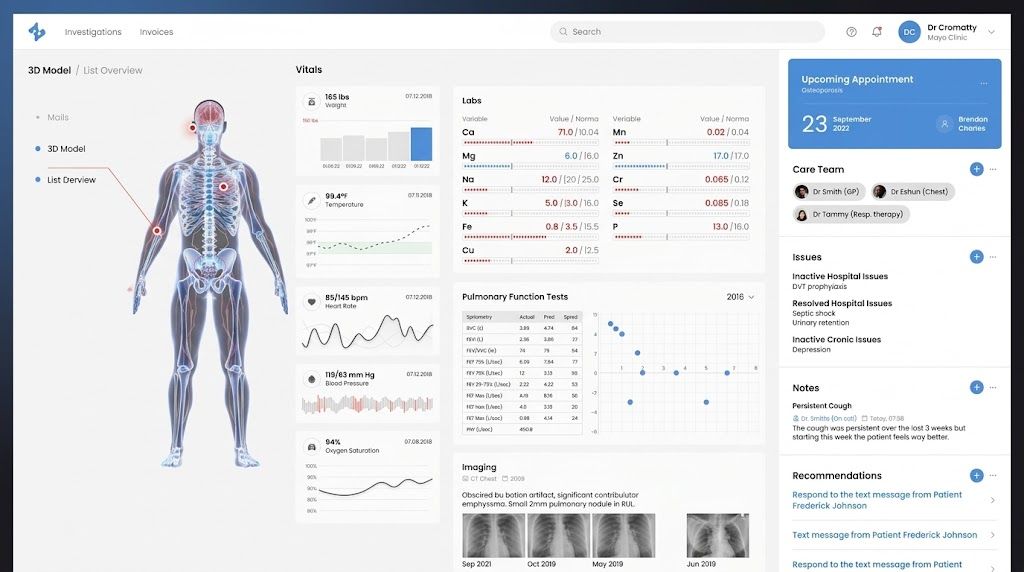
Mental Health App Development: Integrations, Compliance, and Build Process
Building a mental health app? Discover the tech stack, key integrations, and development process for secure, user-friendly telepsychiatry software.

 Time to read: 8 min

Artificial Intelligence
Software Development
November 18th, 2024
LLM Integration in App Development: What Works in Production
API, RAG, or fine-tuning? How to choose an LLM, ground it in your data, and keep token costs under control once the feature is in production.