 CorLab AI Agent

This Tech Assistant is designed to support you with clear insights into our company, our work, our services and the people behind our progress.
Powered by CorLab Tech © 2025





Dedicated development teams
Hire Dedicated Developers Who Work as One Team, Inside Yours
Hire a dedicated development team of senior engineers who run in your tools, your sprint cycle and your hours.
Reviewed and listed on:
Not sure what team shape you need?



Definition
Hiring dedicated developers gives you a complete engineering team that works only on your product: named people, one team, inside your tools and your sprint cycle. CorLab Tech assembles dedicated software development teams of senior engineers, nearshore in Chișinău. Most engagements run as an IT team extension: an extended development team working inside your process.



Roles
Hire a Dedicated Development Team: Roles and Team Shape
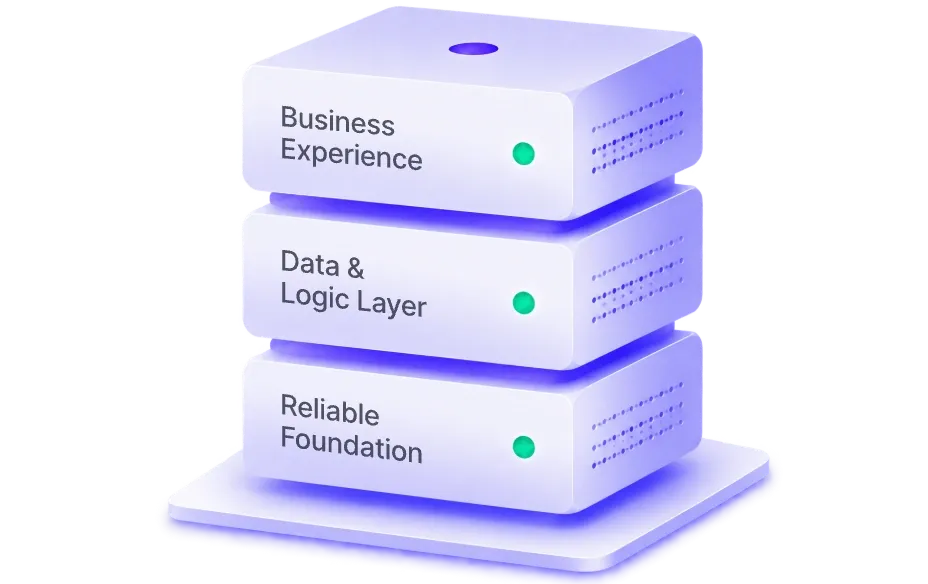
Companies hire dedicated developers from CorLab as complete teams: typically three to eight people across frontend, backend, mobile, QA, DevOps and design, always with a senior core. You choose the people. The team stays the team.

Backend & Data Engineers
Go, Node and Nest, on PostgreSQL, MongoDB, ElasticSearch and neo4j. The data layer is the senior seat on every CorLab team, because in the products we staff, the data model is the product.

Frontend & Mobile Engineers
Angular, React, Next.js and Vue on the web; React Native and Ionic on mobile, sharing the same data contracts so the two clients never drift apart.

Full-Stack Engineers
For teams small enough that one person owns a feature end to end.

QA Engineers
Test automation from the first sprint, not a manual pass before release.

DevOps Engineers
CI/CD, environments and monitoring, so releases are routine instead of events.

Product Designers
Working in CorLab's in-house design system, embedded in the same sprint as the engineers.
Build layer

Angular

React.js

Nest.js

Vue.js

React Native

Node.js

Next.js

Go Lang
Data layer

PostgreSQL

MongoDB

Elastic Search

Neo4j




The Friction We Fix
Where Team Engagements Break Down
Companies that have outsourced before describe the same six failure points, in almost the same words.

The senior engineer from the sales call is replaced by two juniors in month two.

Every new person restarts the vetting, the onboarding and the context from zero.

The team works nights in your daytime, so every question waits until tomorrow.

Nobody on the vendor side ever says no, so scope grows until delivery stalls.

Knowledge lives in one person who can leave with two weeks' notice.

You end up managing the vendor's process instead of your product.


Ways in comparison
Dedicated Team, Staff Augmentation or Project Outsourcing
The dedicated team model is one of three ways to buy engineering capacity, and it is the only one CorLab sells. That makes the other two columns easier to write honestly:
| Dedicated team | Staff augmentation | Project outsourcing | |
|---|---|---|---|
| Best for | A product that needs a full team for six months or more | One or two specialists inside your existing team | A defined project with a fixed end |
| Who manages day to day | A CorLab team lead, inside your priorities | You do | The vendor, against a spec |
| Continuity | The same people for the whole engagement | Per individual contract | The vendor's staffing decision |
| Pricing | Monthly, per team | Hourly or monthly, per person | Fixed bid or time and materials |
| The right call when | You need in-house output without running the hiring | You have engineering management and need capacity | You can write the full spec upfront |
Dedicated team
- Best for
- A product that needs a full team for six months or more
- Who manages day to day
- A CorLab team lead, inside your priorities
- Continuity
- The same people for the whole engagement
- Pricing
- Monthly, per team
- The right call when
- You need in-house output without running the hiring
Staff augmentation
- Best for
- One or two specialists inside your existing team
- Who manages day to day
- You do
- Continuity
- Per individual contract
- Pricing
- Hourly or monthly, per person
- The right call when
- You have engineering management and need capacity
Project outsourcing
- Best for
- A defined project with a fixed end
- Who manages day to day
- The vendor, against a spec
- Continuity
- The vendor's staffing decision
- Pricing
- Fixed bid or time and materials
- The right call when
- You can write the full spec upfront
If staff augmentation or a fixed-bid project is what your situation calls for, we will say so on the first call. CorLab only runs the dedicated-team model.
Software Development
How the Team Assembles, and How You Stay in Control
Every step between the first call and the first commit is a gate you control.


Profiles first. Interviews are yours.
You meet every candidate and reject any of them. Nobody joins the team without your yes, and asking for more profiles costs nothing.

A trial month on real tasks.
The first month runs on your actual backlog, not a test project. If the fit is wrong, you say so and we restaff.

The replacement clause is written down.
If a developer leaves or is not working out, replacement candidates arrive on the timeline written into the contract, with a paid handover so the knowledge stays.

Your tools, your cadence, our management.
The team runs in your Jira or Linear and your sprint cycle. A CorLab team lead handles delivery day to day and reports weekly. You set direction; you never manage individual developers unless you want to.

A nearshore development team on EET, overlapping with US East every day.
Questions get answered the same afternoon, not the next morning.
Industries
Industries Our Teams Work In
Dedicated teams earn their cost on long-lived products, and long-lived products live in regulated, data-heavy industries. That is where CorLab staffs them.


Biotech
Lab and trial-data platforms where the data model is the product.



Logistics
Tracking, routing and visibility systems on live operational data.

Artificial Intelligence
Products with a model in the loop, kept honest by engineers.

Working together, achieving more
How an Engagement Runs
From the first call to steady delivery, every step has a gate you control.

Week 1, team shape
A scoping call, then a team proposal: roles, seniority mix and the monthly price.

Weeks 1–2, interviews
You meet every candidate. The team forms only from your yeses.

Week 3, kickoff
Repo access, NDA, first sprint planned with your product owner, inside your tools.

Month 1, the trial month
Real backlog, weekly demos, fit reviewed together at the end.

Month 2 onward, steady delivery
Weekly reporting, quarterly team review, and scaling up or down on the notice period agreed in the contract.
A Better Fit Starts Here
When You Should Not Hire a Dedicated Team
If you need one developer for six weeks, a dedicated team is the wrong buy. A freelancer or a staffing agency will serve you faster and cheaper, and we will tell you so on the first call. The same is true when nobody on your side owns product direction: a team with no decision-maker to serve burns budget politely.
A dedicated team earns its cost when the product is long-lived, the domain is complex, and hiring in-house would take quarters you do not have.



Tell us the roles. Meet the candidates.
A 30-minute call about your product and the team it needs. You leave with a team shape and a monthly range, whether or not we assemble it.
 Book a discovery call
F.A.Q
Dedicated Teams FAQ
The monthly price is set by team size and seniority mix, with every role priced separately. The team proposal shows the full breakdown before anything is signed, and the price stays fixed per month while the team composition stays the same.