 CorLab AI Agent

This Tech Assistant is designed to support you with clear insights into our company, our work, our services and the people behind our progress.
Powered by CorLab Tech © 2025



API development & integration
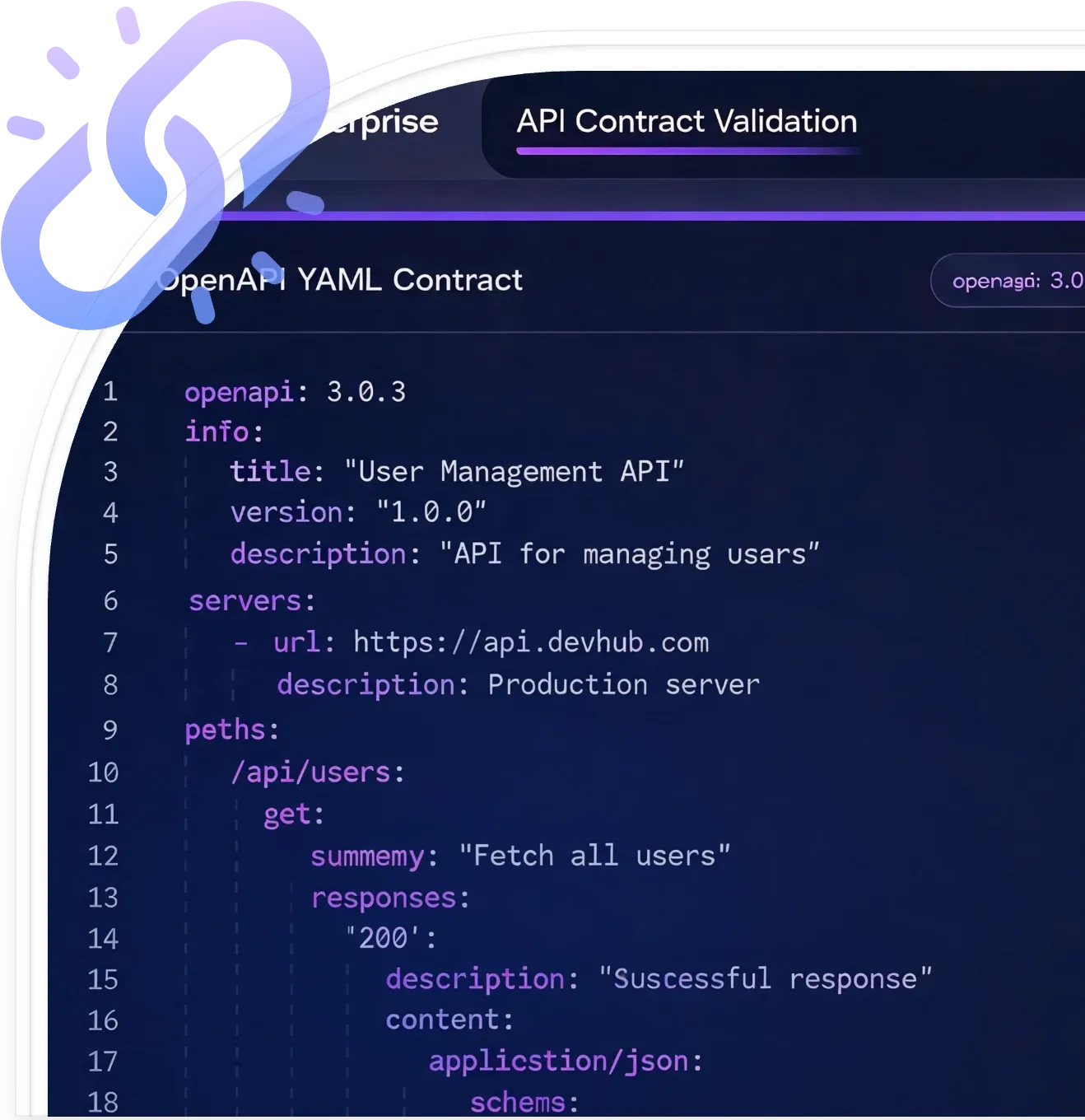
API Development Services, Contract First
Custom API development and third-party API integration: the spec is agreed before the first endpoint is built.
Reviewed and listed on:
Want to learn more about the product we've built?


Definition
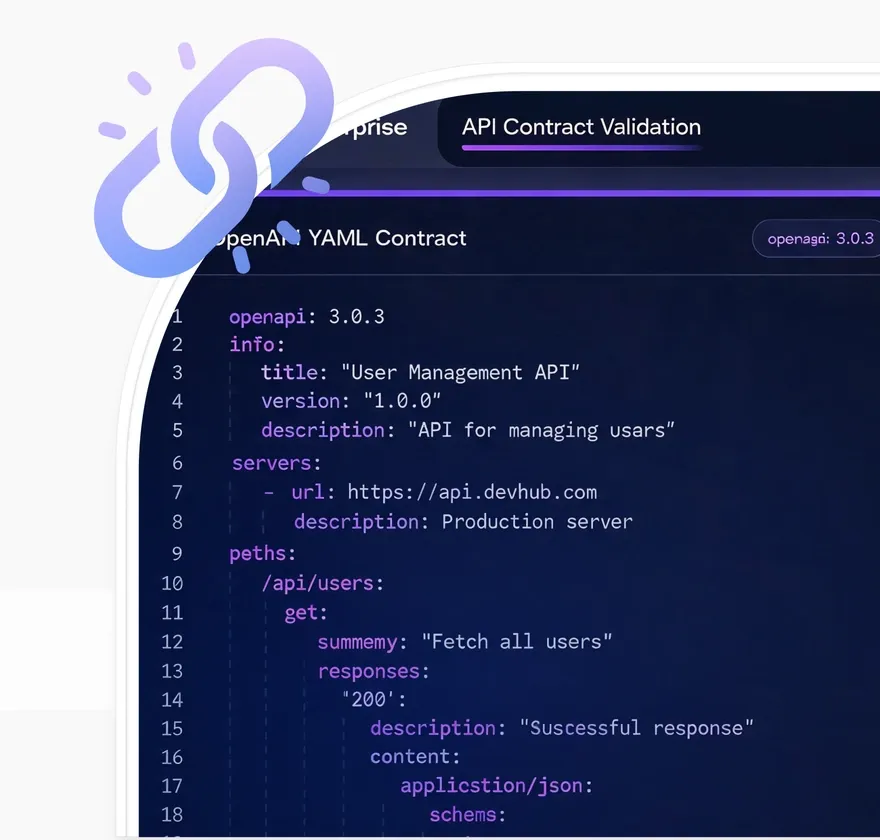
API development services cover three jobs: building your own API, integrating the third-party systems your product depends on, and putting a clean interface over a system that never had one. CorLab Tech builds APIs contract-first, in Go and Node, with the documentation written before the code.


Services
API Development Services We Provide
Most API work lands in one of five shapes. CorLab covers all five, and the first question in every engagement is the same: who calls this API, and what breaks for them if it changes?

Custom API Development
REST and GraphQL API development from scratch for products and platforms: resource design, auth, versioning and documentation as one deliverable, not code with docs promised later.

Third-Party API Integration
Third party API integration services for the systems your product depends on: payment rails, KYC providers, carrier and telematics feeds, clinical data exchange. Every integration ships with failure handling, because third-party APIs go down on a schedule nobody publishes.

API Layer for Legacy Systems
A clean contract over a system that never had one, so modern applications build against the API instead of the legacy code. Often the first slice of a modernization.

API Versioning & Migration
Breaking changes shipped without breaking clients: version policy, deprecation windows, and migration guides your consumers can actually follow.

API Design & Documentation
API design services for teams building in-house: the spec, the review, and documentation that survives contact with real developers.
Technologies We Build With
API Technologies

RestAPI

GraphQL

gRPC

WebSocket
Runtime & data

Go

Node.js

Nest.js

PostgreSQL

MongoDB

Elastic Search

Neo4j
API Contracts

OpenAPI

JSON Schema


The Friction We Fix
Where API Projects Go Wrong
An API that demos well can still be six months away from its first bad week. This is how that week usually arrives:


The docs described the API the team meant to build, not the one they shipped.

Auth was added at the end, so half the endpoints check permissions and half assume them.

There is no versioning policy, so the first breaking change breaks a customer.

Rate limits exist only in the outage postmortem.

The third-party integration worked until the provider changed a field without telling anyone.

Errors return 200 with a message inside, and every client parses them differently.

Ways in comparison
REST, GraphQL or gRPC
The protocol argument is usually the wrong argument. The choice follows from who consumes the API, and it fits in three sentences.
REST
REST works well for broadly compatible APIs and can take advantage of standard HTTP caching when caching rules are designed explicitly.
GraphQL
When your own front ends ask many shapes of the same dataset: one endpoint, and the UI decides the view. GraphQL API development earns its place there, and rarely elsewhere.
gRPC
gRPC is well suited to strongly typed service-to-service communication, low-latency workloads and streaming, especially when teams can support its code-generation and HTTP/2 tooling.
Most products end up with two: REST at the edge, gRPC inside. The spec review settles it in week one, not in a rewrite.
API Engineering Standards
What Makes an API Production-Grade
The difference between a demo API and a production one is four decisions, all cheaper made early.


Auth designed once, enforced everywhere.
OAuth2, JWT or API keys chosen for the consumer, applied in middleware, so no endpoint can forget to check.

A versioning policy written before v1 ships.
The first breaking change arrives earlier than anyone plans, and deprecation windows are a promise to customers, not a technical detail.

Rate limiting and quotas from day one.
Rate limits, quotas and resource controls that protect the API, downstream dependencies and fair access for all consumers.

Observability per endpoint, per consumer.
Latency, error rate and usage by client, so “the API is slow” becomes a graph instead of an argument.




Enterprise Integrations
Systems We Integrate With, by Industry
Systems get rewritten; data gets carried. It is the part of legacy system migration that cannot be done twice, so it gets its own plan.


Logistics
Carrier and telematics APIs, route and ETA feeds, warehouse systems.



Payments & identity
Payment processors, KYC and AML providers, e-signature.


Data & AI
Vector stores, LLM APIs and model endpoints, wired with the same auth discipline as everything else.
API Delivery Process
How an API Project Runs, Contract First
Focused on your unique needs, our dedicated team of developers and consultants makes it easy to build your software solution through our complete development approach.

Week 1, the spec
Consumers interviewed, resources designed, the OpenAPI contract drafted. Gate: you sign the spec, and the spec is the scope.

A mock server in days
Front-end and partner teams build against the mock while the real API grows behind it. Nobody waits.

Weeks 2–[4], build
Endpoints land against the contract, with tests generated from the spec, error shapes included: a failure returns a real status code, never a 200 with an apology inside.

Consumer tests before release
Every known client is exercised against the release candidate, and spec diffs catch breaking changes before support tickets do.

Handoff
Documentation, dashboards and the versioning policy, in your repo.
Engagement Fit
When You Do Not Need an Agency for This
If you need one Zapier connection or a single webhook into a spreadsheet, an agency engagement is overkill. A no-code connector or a day of a freelancer's time will do it, and we will say so on the call.
Companies hire API developers when other businesses build against the API, when the data is regulated, or when the integration has to survive the provider's next surprise. That is engineering work, and it is what this team does.

Bring the system that needs a front door.
A 30-minute call about who will call your API and what it must never break. You leave with a spec outline and a realistic range.
 Book a discovery call