 CorLab AI Agent

This Tech Assistant is designed to support you with clear insights into our company, our work, our services and the people behind our progress.
Powered by CorLab Tech © 2025




Software modernization services
Software Modernization Services Without the Big-Bang Rewrite
Legacy application modernization in increments: same business logic, survivable stack, and the system never stops running.
Reviewed and listed on:
Not sure whether you need a rewrite?


Definition
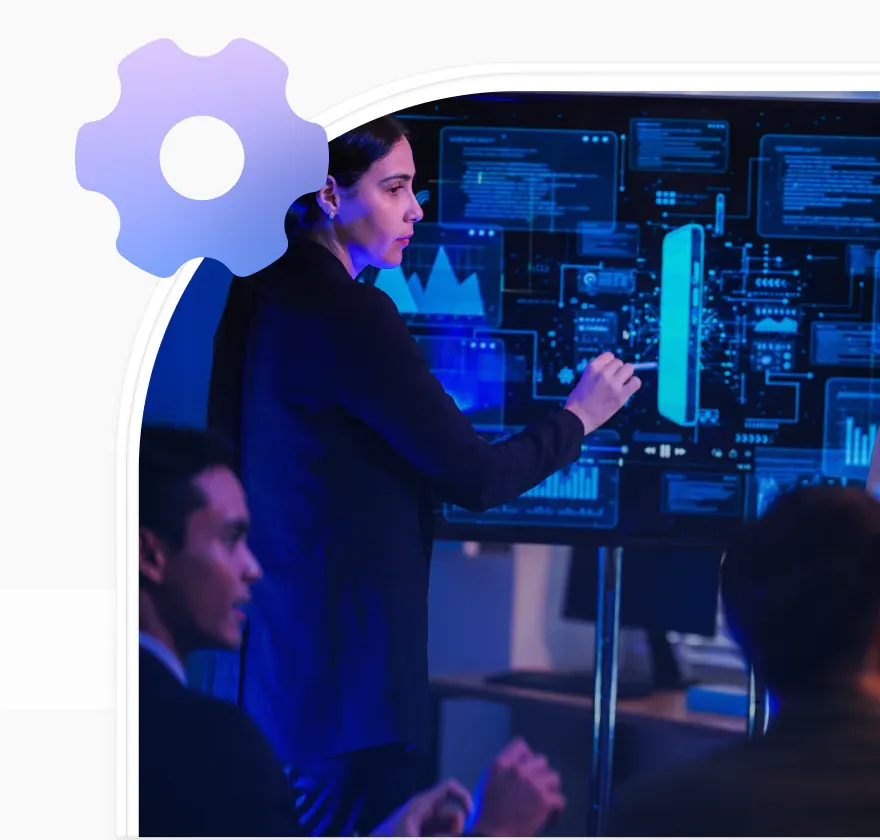
Software modernization services replace the parts of a working system that have become risks: the framework nobody hires for, the database straining at scale, the code only one person can touch. CorLab Tech modernizes legacy applications in increments, so the business logic survives and the system keeps running throughout.



Services
Software Modernization Services We Provide
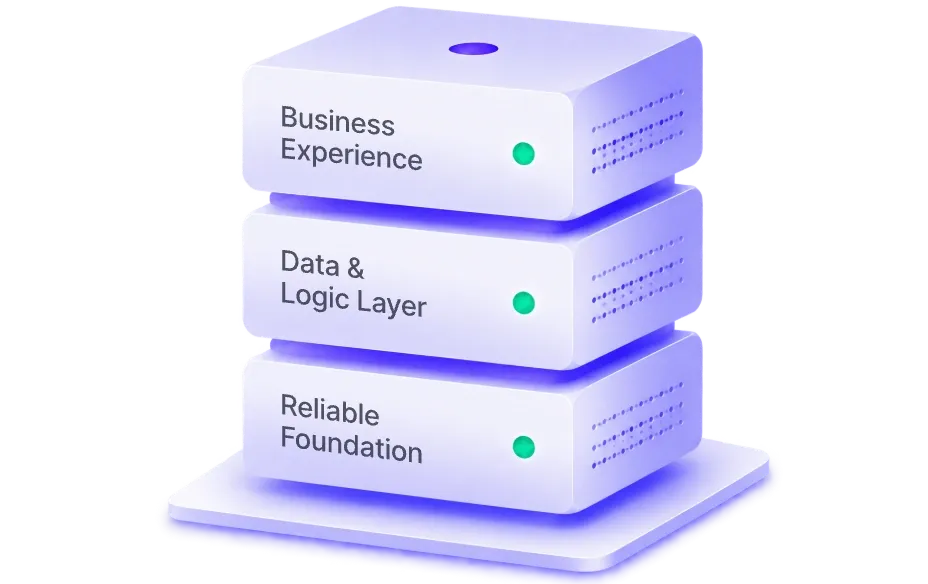
CorLab's modernization work starts with a fixed-scope assessment and continues only if the findings justify it. Six services cover the usual technology modernization routes out of a legacy system, and most engagements combine two or three.

Modernization Assessment
Two weeks at a fixed price, run as application modernization consulting. The system mapped, the risks registered, a roadmap with effort bands. You keep all three documents whether or not we build.


Application Re-Architecture
Software reengineering that carves monoliths into services along the seams the data already has: Go and Node.js services around the pieces that need to scale, the rest left alone on purpose.


UI Modernization
AngularJS to Angular migration, and legacy front ends rebuilt in React or Next.js, screen by screen behind a router, so users never hit a cliff.


Database & Data Migration
Schema redesign and migration from the database you have to the one the product needs: PostgreSQL, MongoDB, ElasticSearch, neo4j. Dual-write windows and reconciliation reports, never a weekend cutover prayer.


Cloud Replatforming
Cloud migration services scoped by what the system needs, not by what the platform sells: lift, containerize, move, and patch what the old runtime could no longer take.


Maintenance & Support
Software maintenance and support services for systems that only need to keep running: monitoring, patches, small fixes, an SLA. Not every legacy system needs modernizing, and support is sometimes the honest recommendation.


Technologies We Build With

Front-End

Angular

React.js

Next.js
React Native

Back-End

Node.js

Nest.js

Go Lang

Data & Infrastructure

MongoDB

Elastic Search

Neo4j

PostgreSQL


The Friction We Fix
Signs It Is Time to Modernize
No one modernizes for fun. These are the six signs that the cost of waiting has passed the cost of the work.

A release that used to take a week now takes a quarter.

You are hiring for a framework whose conferences stopped years ago.

Scaling means a bigger server, because there is no other way to scale it.

The security audit found things the framework can no longer fix.

One engineer knows how deployment works, and they are talking about leaving.

Every new integration starts with “it depends what the old system allows.”


Ways in comparison
Rehost, Replatform, Refactor or Rebuild
Application modernization services usually mean one of four moves, in rising order of cost and payoff:
| Rehost | Replatform | Refactor | Rebuild | |
|---|---|---|---|---|
| What changes | The servers only | Runtime and infrastructure | The code, incrementally | Everything |
| Duration | Weeks | One to three months | Quarters, in slices | Longer than anyone plans |
| Risk profile | Lowest; least changes | Low; behavior preserved | Managed per slice | Concentrated at cutover |
| Business logic | Untouched | Untouched | Preserved and cleaned | Reimplemented |
| The right call when | The problem is the hosting bill | The platform is the blocker | The code is the blocker and must keep running | No users or data worth keeping |
Rehost
- What changes
- The servers only
- Duration
- Weeks
- Risk profile
- Lowest; least changes
- Business logic
- Untouched
- The right call when
- The problem is the hosting bill
Replatform
- What changes
- Runtime and infrastructure
- Duration
- One to three months
- Risk profile
- Low; behavior preserved
- Business logic
- Untouched
- The right call when
- The platform is the blocker
Refactor
- What changes
- The code, incrementally
- Duration
- Quarters, in slices
- Risk profile
- Managed per slice
- Business logic
- Preserved and cleaned
- The right call when
- The code is the blocker and must keep running
Rebuild
- What changes
- Everything
- Duration
- Longer than anyone plans
- Risk profile
- Concentrated at cutover
- Business logic
- Reimplemented
- The right call when
- No users or data worth keeping
Most CorLab engagements lead with legacy code refactoring, replatforming where it pays. Rebuilds are rare, for the reasons in the last column.
Software Modernization
How We De-Risk the Move
Patterns are the easy part. The hard question is whether the system stays up while it changes, and four mechanics keep it up.


The strangler pattern, not the big bang.
New services take traffic route by route. The legacy system keeps serving everything else until each piece has proven itself in production.

Parallel running with reconciliation.
Old and new produce the same reports side by side until the numbers agree, cycle after cycle, against a threshold set upfront. Only then does the old path retire.

A feature freeze measured in weeks, not quarters.
Scoped per slice and agreed upfront. The roadmap shows exactly when normal delivery resumes.

A rollback that has been rehearsed.
Every cutover has a tested way back, because the migrations that go wrong are the ones that assumed they would not.

Behind the Scenes
Your Data Survives the Move
Systems get rewritten; data gets carried. It is the part of legacy system migration that cannot be done twice, so it gets its own plan.


Schema mapping signed off before any code: every field's destination named, including the ones nobody remembers creating.

History preserved: audit trails and timestamps survive the move, because in regulated industries the data's past is part of the data.

Dual-write windows while both systems live, so nothing depends on one perfect night.

Reconciliation reports until row counts, sums and spot checks agree.
The Modernization Journey
How a Modernization Runs, Starting With the Assessment
Every modernization starts with an assessment you keep, and continues only if the findings justify it.

Weeks 1–2, the assessment.
System map, risk register, roadmap with effort bands. The roadmap is your application modernization strategy, priced before you commit to any of it. You keep everything either way.

Roadmap ordered by risk
Slices ranked by the risk they retire per week of work.

Slices in short, fixed cycles
Strangle, parallel-run, retire, next slice. A working system after every cycle.

Data on its own track
Migration runs beside the code work, gated by reconciliation, never rushed to match a code deadline.

Exit on your terms
Documentation and handover to your team, or the same engineers stay on maintenance. Both are normal endings.
Beyond Modernization
When We Advise a Rewrite Instead
If the system has no users yet, no data worth carrying, and the team that built it is gone, a rewrite is usually cheaper than a careful migration, and the assessment will say so in writing. The same honesty runs the other way: a system that only needs patches and monitoring gets maintenance, not a modernization invoice.
An application modernization company earns its cost when the system is live, the data matters, and stopping is not an option.


Start with the assessment. Keep everything it finds.
A 30-minute call about the system and what it blocks. You leave knowing whether you need modernization, maintenance, or neither.
 Book a discovery call
F.A.Q
Software Modernization FAQ
A software modernization company should price the roadmap before the work. CorLab's assessment has a fixed price, and it prices every slice after it in effort bands, so the full cost is known before you commit to any delivery. Projects start at $10,000.