CorLab AI Agent

This Tech Assistant is designed to support you with clear insights into our company, our work, our services and the people behind our progress.

Powered by CorLab Tech © 2025

background

Biotech Software Development Services.

CorLab Tech provides biotech software development services for research teams and life science companies.

Senior nearshore engineers build the bioinformatics pipelines, the LIMS and ELN integrations, and the analytics layer above them.

Tell us where the data sits today.

Selected work

Watch It in Action

The screen above is a target landscape: every compound aimed at one protein, grouped by how far it got. Most of the build sits upstream of the chart, reconciling identifiers across chemical databases and trial registries so a molecule appears once, not three times under three names.

Where lab data breaks down

What's Holding Biotech Teams Back

Biotech teams rarely lack data. They lack a path from the instrument that produced it to the analysis that has to defend it, because the systems in between were bought separately and nobody owns the joins.

01

Fragmented Data Systems

A sample carries one identifier in the LIMS, another in the instrument export, a third in the analysis output. Work starts with matching records instead of with the question.

02

Vendors Without Lab Experience

03

Outdated Lab Systems

04

Sensitive Data and IP

Services

Biotechnology Software We Build

Biotechnology software development at CorLab starts from the data the lab already produces. Life sciences software development is integration first: instruments, LIMS and analysis have to agree before anything gets designed.

Bioinformatics Pipeline Development

Bioinformatics services for the pipelines that turn instrument output into results a study can rely on: CRISPR screens, ChIP-seq, RNA-seq. Existing pipelines get containerised so the same FASTQ returns the same VCF a year later. Most bioinformatics consulting starts there.

LIMS, ELN and Scientific Data Platforms

LIMS integration and lab data integration: getting a laboratory information management system, an electronic lab notebook and a scientific data management system to agree on one sample identifier instead of three, so sample tracking survives every handoff.

Research Dashboards and Analytics

Life sciences analytics software on top of the reconciled data: cohort queries across studies that were never designed to be joined, and the reporting a team needs before a readout. The semantic layer underneath makes one question return one number.

Clinical and Trial Data Systems

Clinical trial management software development services for sponsors and CROs whose study data outgrew its platform. Usually integration, not replacement: an EDC, a CTMS and an eTMF holding parts of one study, plus the CDISC mapping.

AI and ML for Research Workflows

Model work on research data: structured extraction from study documents, classification over imaging and assay output, retrieval over a corpus nobody has time to read. Where a query or a rule answers the question, that is the recommendation.

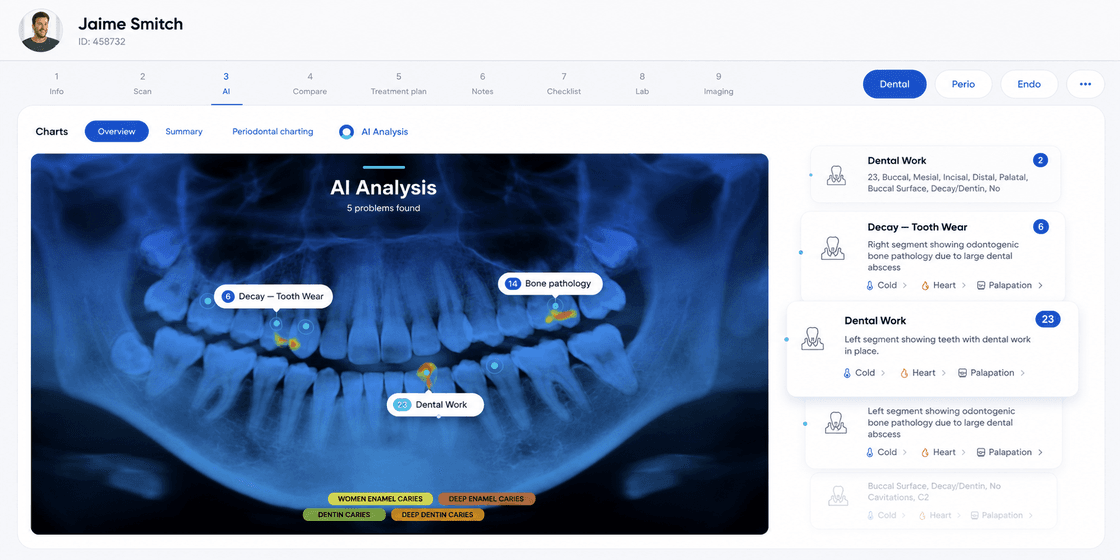
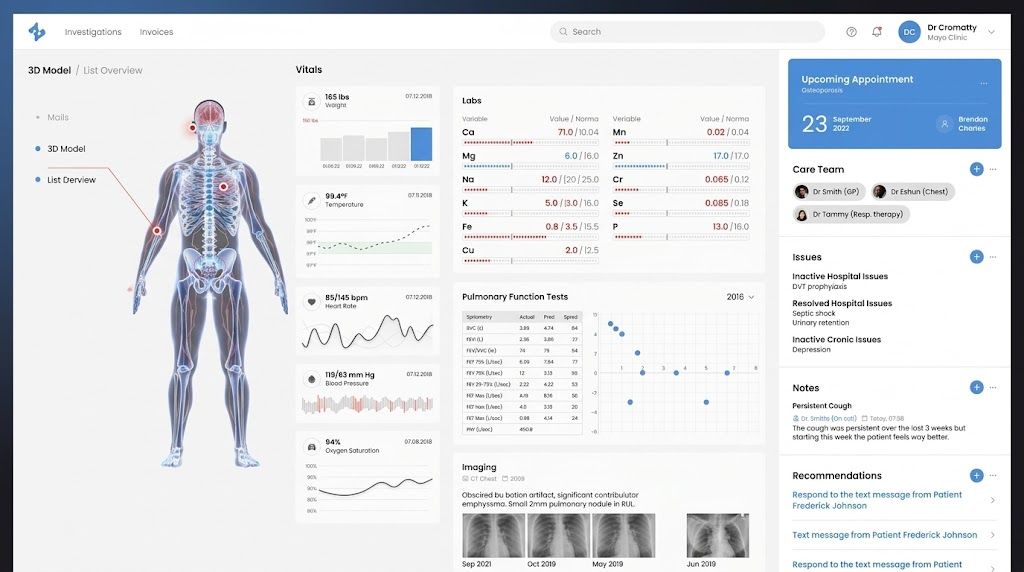
fusedash ai storytelling chart

Integration, Migration and Validated Modernisation

Migration between lab systems, and modernisation of software that has to stay inspection-ready across the move. Computer system validation services cover the protocols and the traceability matrix where the quality system requires them. LIMS validation is the common case.

fusedash ai charts

The difference

Why Lab Software Is Not Business Software

Most of what makes a lab system hard is invisible in a demo. Four requirements have no equivalent in ordinary business software, and each one shapes the data model.

A Record You Cannot Overwrite

Business systems update a row and move on. A regulated lab system keeps the prior version and who changed it, because the audit trail is the record.

Identifiers You Do Not Own

A CRM issues its own IDs. A lab system inherits them from instruments, kit vendors and a spreadsheet, none of which were asked to agree. Reconciling them is the first build task.

Results That Re-Derive

A dashboard number can be recalculated. A reported result has to come back identical from the raw file two years later, which is a packaging problem before it is an analysis one.

Users Who Will Not Be Trained

Enterprise software assumes onboarding. A scientist evaluates a new tool between runs, and if the first task is not obvious the spreadsheet wins and keeps winning.

Selected work

Life Science Software Solutions We Have Built

These are life science software solutions where the data model was the hard part: relationships that tables handle badly, and results that reach a signed report without being retyped.

Custom Biotech Dashboards

Life Science Software Solutions

FAQ

Biotech Software Development FAQ

Questions that come up in most first conversations about a lab software build.

Hide

Can you integrate with our existing LIMS or ELN?

LIMS integration is the most common request in this cluster, and it usually starts with reconciling identifiers rather than with connecting systems. The same sample carries one ID in the LIMS, another in the instrument export and a third in the analysis output. Where a platform exposes no usable API, the integration is built against the database beneath it.

Show

Should we buy a commercial LIMS or build our own?

Show

What regulations apply to biotech and life science software?

Show

Does custom laboratory software need computer system validation?

Show

What is the difference between biotech and pharma software?

Show

What does a bioinformatics pipeline project involve?

Show

How do you protect research data and intellectual property?

Our Best Insights

Biotechnology
Development Blogs

Want to know what’s trending in the biotech world? Our articles break it all down - quickly and clearly.

Custom Software for Mental Health
Time iconTime to read: 3 min
Healthcare

Healthcare

Software Development

Software Development

December 30th, 2024

Custom Software for Mental Health

Building a mental health app? Discover the tech stack, key integrations, and development process for secure, user-friendly telepsychiatry software.

Impact of OpenAI on App Development
Time iconTime to read: 6 min
Artificial Intelligence

Artificial Intelligence

Software Development

Software Development

November 18th, 2024

Impact of OpenAI on App Development

From MVP to enterprise, OpenAI helps developers create intelligent, high-impact apps faster — driving innovation across industries.