


 CorLab AI Agent

Welcome to your Personal Assistant
This Tech Assistant is designed to support you with clear insights into our company, our work, our services and the people behind our progress.
Powered by CorLab Tech © 2025
What Is Bespoke Software? Custom vs Off-the-Shelf Software
Bespoke software is built for one organization's workflow, data and rules, rather than sold as a product to many customers. The term means the same as custom software, and "bespoke" is the British-leaning word. It earns its cost in two cases: the workflow sets the business apart, or a hard requirement rules out every available product. Otherwise, buying or extending a product wins.
What is custom software development?
Custom software development is the work of specifying, building and handing over software for one organization's process, instead of configuring a product built for a market. The deliverable is source code, a data model and documentation the client controls. Whether another team can maintain the system later depends on how well that documentation and the tests were done.
The process starts with requirements: what the software must do, for whom, and under which rules. A requirement such as "a pharmacist dispenses only a valid prescription" is still a sentence at this point. People can test it against real cases and change it cheaply. In healthcare software, requirements also say who may see which records, and that rule shapes the architecture before any screen exists.
A specification turns those sentences into decisions a developer can build against. It fixes the data model, the integrations, the roles and permissions, and the acceptance criteria that define when a feature is done. The data model is the hardest of these to reverse, because every screen and report is built on it.
The build runs in short iterations, with working software shown to the people who will use it. By the end, the client should hold the repository in its own account, the deployment scripts, the environment configuration and the credentials for every connected system. Documentation should let a new team release the system without the original developers.
Without that handover, custom-developed software is a long rental of one vendor's time. Code that only one vendor can deploy behaves like a product with a single supplier, which is the lock-in a build was meant to avoid. A bespoke software development company should be able to show the handover on a past project, not only describe it.
That control over code, data model and roadmap is what a buyer pays for. Whether it is worth the price depends on what a product would cost and what it could not do.
Bespoke vs off-the-shelf software
Bespoke and off-the-shelf software differ in when the money is spent and who adapts to whom. Off-the-shelf is usually cheaper and faster to start, and the buyer changes the process to fit the product. A custom build costs more up front and takes months; in return, the software follows the process, the data model and the systems the organization already runs.
Bespoke | Off-the-shelf | |
| Fit to the workflow | Built around it | Process adapts to the product |
| Upfront cost | High: discovery and build | Low: setup and onboarding |
| Ongoing cost | Maintenance, hosting, changes | Licenses by seat or tier |
| Time to go live | Usually months | Days to weeks for a standard setup |
| Integration with existing data | Designed for your systems | Vendor's connectors and API |
| Who owns the code | Client, if the contract assigns the IP | Vendor; the client holds a license |
| Who controls the code | Client, if the repository sits in its account | Vendor |
| Cost of switching away | Changing developers: moderate with repository and docs, high if one team holds the knowledge | Changing products: data export, migration, retraining |
| Who maintains it | Client's team or a contracted vendor | Vendor, on its own roadmap |
| Where the hidden cost sits | Unclear requirements, key people | Unused seats, renewal increases |
Off-the-shelf costs sit on a price page and grow with headcount. The cost of bespoke software solutions is a forecast, as accurate as the requirements behind it. Ask for the estimate as a range, with the assumptions that would move it, and set it beside five years of license cost at the expected headcount.
Owning the code and controlling it are separate, and a buyer needs both. Ownership comes from an IP assignment clause. Under US law, software written by an outside contractor is generally not a work made for hire, according to the US Copyright Office. The developer keeps the copyright unless a signed agreement transfers it. Control comes from a repository in the client's own account.
Rules differ by country, so the clause deserves a lawyer's review in the client's jurisdiction. Custom-built software that lacks the IP clause or the repository can carry more lock-in than a product, because there is one supplier and no other customers pushing it toward a roadmap.
A product in a standard setup can reach users within days because another company already built, tested and documented it. A custom system has to do that work first, which usually takes months. Large suites are the exception on the buying side: an ERP rollout can take as long as a build, because its configuration is a project of its own.
Integration is the row that most often decides whether any product fits at all. A long list of legacy or undocumented systems usually pushes a custom software vs off-the-shelf decision toward a build. Before signing, test the two hardest integrations in the vendor's sandbox rather than the sales demo. The comparison of custom vs off-the-shelf healthcare software applies that test to clinical workflows.
When off-the-shelf is the better choice
Off-the-shelf software is the better choice when the process is standard, the team is small and the data carries no unusual constraint. Payroll, email, accounting and ticketing rarely set a company apart from its competitors. Rebuilding them costs months and a maintenance bill, and customers are unlikely to notice the difference.
Martin Fowler draws the line between utility and strategic functions. Where the process is part of the competitive advantage, build; everywhere else, buy a package and change the process to fit it. He expects few systems to be strategic, suggesting the split may be closer to 95/5 than 80/20, and notes that a function can move between the two over time.
A small team pushes the line further toward buying, because it gets a tested product, vendor-run security patches and a support desk for the price of a few licenses. Running its own system, the same team needs someone who can deploy, patch and debug it every year. For that team, off-the-shelf vs custom software comes down to which product to buy.
Buying carries its own cost after the contract is signed. Organizations leave an average of 36% of their SaaS licenses unused, measured against industry-recommended utilization levels, according to Zylo's 2026 SaaS Management Index. Zylo sells SaaS management software and has a stake in that finding, but the index draws on more than 40 million licenses.
The same report puts median SaaS spend at $9,455 per employee. At that level of spend, unused seats deserve a check at every renewal, before anyone compares the license line with a build.
A product can also be ruled out before anyone compares features. "Does it leave here?" is the most useful question a hospital IT lead ever asked me about analytics. He meant whether the data leaves the building at all, which encryption in transit and EU hosting do not answer.
When I wrote up the self-hosted BI platform built for that situation, I traced low BI adoption to three causes. Per-seat pricing is built for large firms, most products assume someone on staff writes SQL, and many health and public bodies have policies that forbid the cloud outright. A different product could fix the first two; the third rules out every hosted product at once.
A cloud ban like that is the hard-requirement case from the opening. The shortlist shrinks to self-hosted products and extensions of systems already in place, and a build earns its cost when neither meets the rule.
Three questions settle most cases. The first two come from the opening; the third decides whether the organization can own a build once it ships.
Question | Points toward a build | Points toward buying or extending |
| Does the workflow set the business apart? | Yes, customers choose the company for it | No, competitors run it the same way |
| Does a product meet the hard requirements on data location, integration and regulation? | No product does, even configured or extended | One does, or can through its API |
| Can the organization fund maintenance and a second team able to deploy, for as long as the system runs? | Yes, with a budget line for both | No, or nobody can name the owner |
The middle routes: configure, extend, or build only the edge
Between buying a product as it ships and building from scratch sit four routes: configure the product, customize its code, extend it through its API, or build only the piece no product covers. Low-code platforms are a fifth option, and their pricing and lock-in put them closer to buying.
Configuration uses settings the vendor designed and supports, such as fields, workflows, roles and templates. Upgrades usually carry configuration forward because the vendor tests for it, which makes it the cheapest route to run. Customization changes the product itself, through scripts or modified code, and the vendor's next release can break it without warning.
In a separate note, Fowler cites a customization a colleague found that ran to 300,000 lines of code. Packages rarely give such code version control, automated testing or a deployment pipeline, so every vendor upgrade has to be checked against all of it. Before customizing, he suggests asking a customer with similar changes what its last upgrade took.
Extension through an API is the route Fowler prefers over customization. The product stays the system of record, and a separate application reads and writes through the documented interface for the part of the workflow the product does not handle. The cost is a second application to maintain and a dependency on that API staying stable.
Building only the missing piece is the narrowest route. When I built a synchronized VR platform for my department, the Meta Quest headsets, their software and the 360° video library already existed. What was missing was playback one teacher could control for the whole room; starting a video on twelve headsets by hand could cost fifteen minutes of a fifty-minute class.
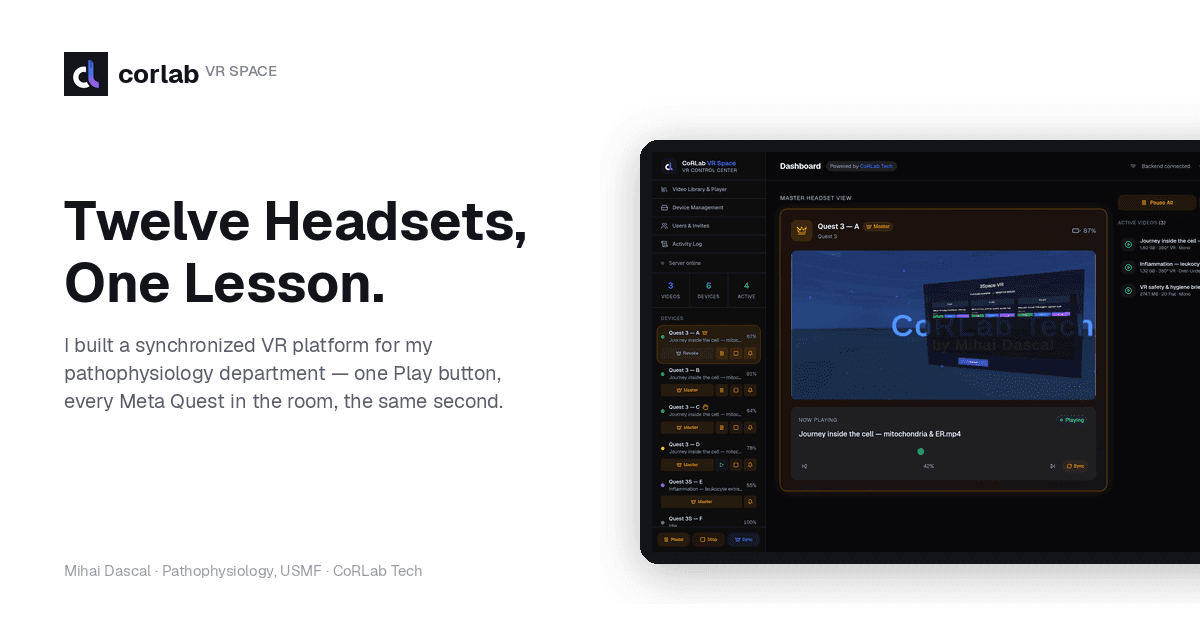
One rule written before any code fixed the build's shape: the classroom network has no internet access, so nothing in the play path may call out to the cloud. The same rule excluded any service that coordinates headsets through the cloud, so the build covered synchronized playback and nothing else.
Logistics software often follows the same split. A transportation or warehouse management system that already works stays the system of record. The custom work goes into the data layer around it, such as reconciling shipment events that arrive from scanners and carriers in different formats.
Low-code platforms produce forms, approval flows and internal dashboards quickly, and they suit processes that change every quarter. The logic lives in the platform's own format, though, so leaving means rebuilding it. Before committing, price the platform at full headcount and check whether the logic can be exported in any usable form.
Advantages and disadvantages of bespoke software
The advantages of bespoke software hold only under conditions. Fit depends on the requirements being right, control depends on the IP clause and repository, and integration depends on someone maintaining it. The disadvantages are cost, time, key-person risk and maintenance, and they arrive whether or not those conditions hold.
Benefits of custom software development show up where the workflow is the differentiator or a requirement exists that no product meets. With the IP clause and the repository in place, no product vendor can retire a feature the organization depends on or raise a license price at renewal.
Scalability and security are trade-offs rather than automatic advantages. A custom system scales as far as its data model and hosting were designed to, while a product scales on the vendor's infrastructure within its plan tiers. A widely used product is a bigger target but gets patched by its vendor; a custom system is only as secure as its team's practices, such as those in NIST's Secure Software Development Framework.
A build pays for discovery, design, development and testing before the first user logs in, while a product spreads those costs across thousands of customers. Months pass before anyone uses the system, which matters when the current problem costs money every week. Building the differentiating workflow first as an MVP shortens that wait and tests the case for the rest of the budget.
When two developers hold the system's logic in their heads, their departure leaves software that runs but that nobody can safely change. Documentation, automated tests and a second team able to deploy are the countermeasures. Each one needs its own line in the budget, because none of them ships as a feature.
Maintenance continues after launch. A Node.js long-term support release typically receives critical bug fixes for a total of 30 months, according to the Node.js project. A system built on one needs an upgrade inside that window. A product's vendor absorbs most of that work, while the owner of a custom system pays for it every year the system runs.
Bespoke software examples
Bespoke software examples are easiest to judge when the reason for building is visible. In the three CorLab Tech projects below, that reason is a national payer's rules, a company whose product is the workflow, and a borderline case. Estonia's X-Road adds an outside example of building only the edge.
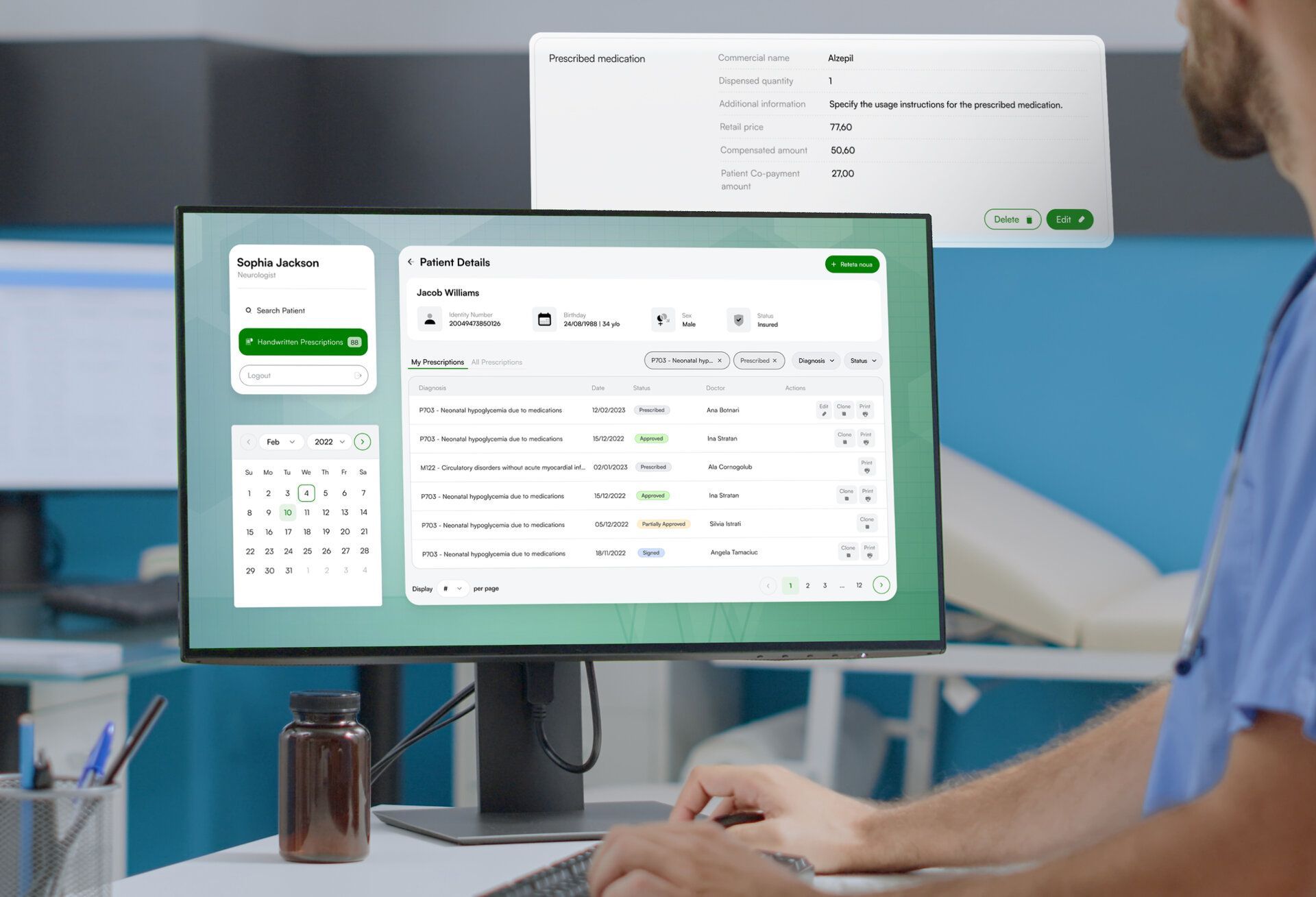
CorLab Tech built Moldova's national e-prescription system with the government in 11 months, and it launched on April 1, 2024. Doctors prescribe reimbursed medicines and medical devices; pharmacists find the patient by personal identification number or ID scan and dispense only valid prescriptions.
Reimbursement, prescription validity and identity checks follow one national payer's policy, and a product built for another market would likely need exactly those parts rewritten. By April 2026, about 2,500 doctors from 1,400 medical institutions prescribed through it, and about 900,000 unique patients had used it, roughly 38% of the resident population. Those figures come from the National Health Insurance Company, as reported by Logos Press.
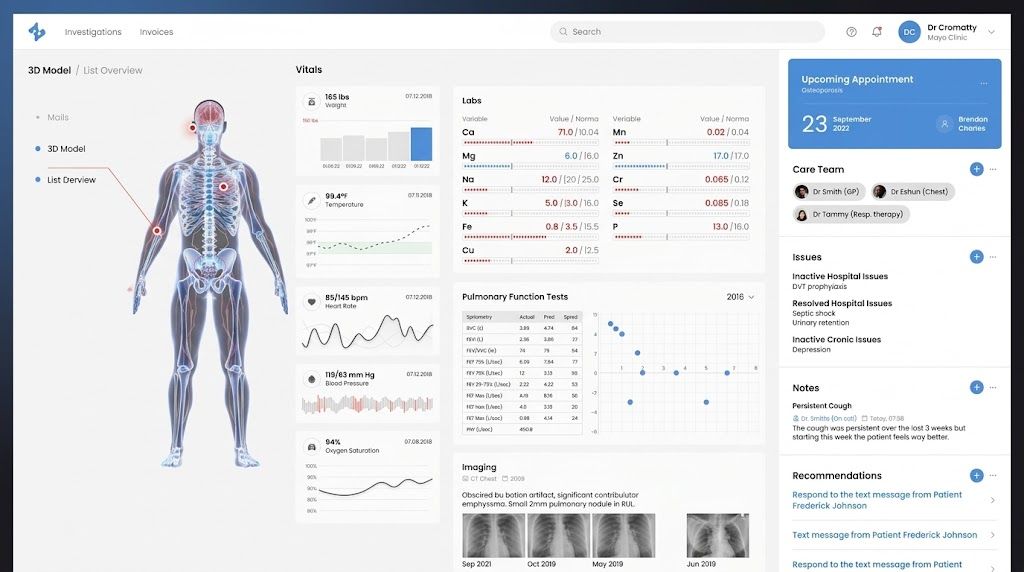
The ReferralMD platform is a different kind of custom build. Referral management is the product ReferralMD sells, so the workflow sets the business apart by definition. A configured third-party tool would have tied that product to someone else's roadmap.
An earlier in-house version had failed on usability, with too many screens to learn without training. The rebuild gathered referrals from fragmented systems into one dashboard, accepted electronic referrals including those first sent by fax, and added real-time chat between doctors and specialists.
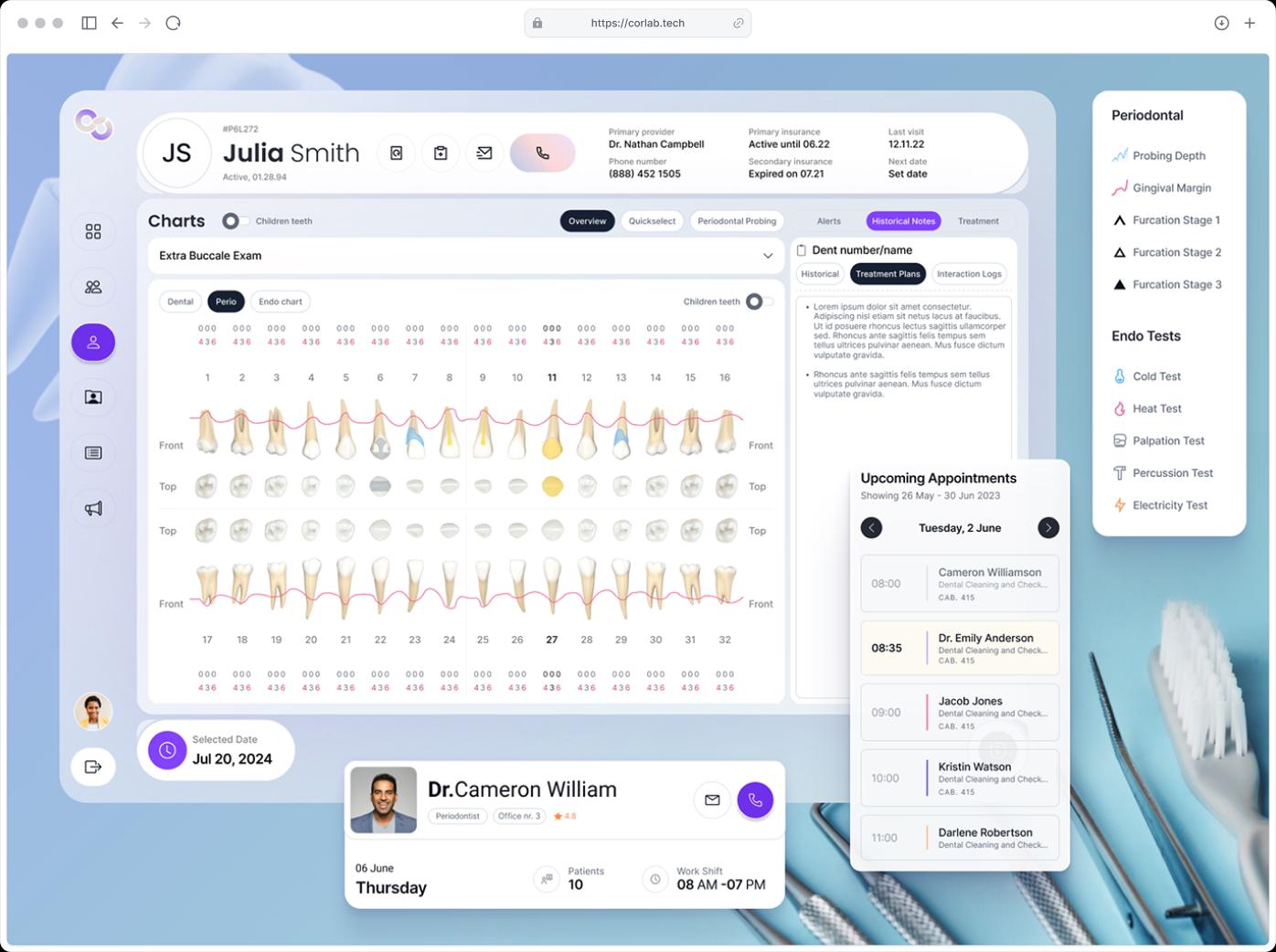
The dental practice platform is the borderline case, because practice management products for dentists already exist. The clinics were coordinating appointments, referrals and treatment plans across fragmented systems. After time spent with dentists to learn what slowed them down, the build put all three in one place, with a color-coded chart that tracks periodontal pocket depths.
Estonia's public registers were developed independently, ran on different database back ends and lacked standard interfaces. Rather than replace them, Estonia built X-Road, a data exchange layer between them; national deployment began on December 17, 2001, according to the X-Road project history.
None of these case studies records the products considered and rejected, so they show what a build produced, not that a product would have failed. A buyer in a similar position should first configure the closest product against the real workflow, and build only if that test fails. More custom software examples sit in CorLab Tech's case studies.
Developing bespoke software: what to settle before the first sprint
Developing bespoke software goes better when two things are settled before the first sprint. The first is requirements the client's own users have read and challenged; the second is the legal and technical ownership of the code. Both cost little to change while they are documents, because nothing depends on them yet.
My live lesson platform was built spec-first: 66 requirements in 12 user stories and over 100 tasks, written before any code. Even so, two requirements contradicted each other. One had the AI propose questions from the text of each slide; the other required it to ground every question in the topic's source materials.
I caught the conflict only after the code had followed the second rule, which made source materials mandatory and blocked a teacher who had uploaded only a slide deck. I fixed the specification first and the code second.
A contradiction like that is easier to catch in a specification review than in a demo, where each feature works on its own. A buyer can ask for the specification before development starts and read it the way users would, looking for two rules that cannot both hold. A vendor unwilling to share it before the first sprint is a reason to pause the contract.
Ownership is the second item. The contract needs an IP assignment clause, and the repository should sit in the client's own account from the first commit, with the vendor as a collaborator. A vendor that keeps the repository until final payment holds the system as collateral, and that term is hard to renegotiate once code exists. In practice, the two items break down into five checks.
Check before the first sprint | Why it matters |
| A written specification the client's own users have read and challenged | Contradictions surface before any code depends on them |
| Acceptance criteria for each feature | "Done" means the same thing to both sides |
| An IP assignment clause in the signed contract | Copyright in the code transfers to the client |
| A repository in the client's account, with the vendor as a collaborator | Progress stays visible and the work can move to another team |
| A right to a full data export from any vendor-hosted environment | Leaving stays possible after launch |
For a bespoke system, the export right needs more care than it looks. Since September 2025, the EU Data Act has given customers of cloud and SaaS services the right to switch providers and take their data in a commonly used, machine-readable format, according to the European Commission.
Those rules reach bespoke software only when a vendor runs it as a hosted service. Even then, Article 31 of Regulation (EU) 2023/2854 exempts services custom-built for one customer from some obligations, such as the removal of switching charges, while the contractual switching terms still apply.
For a system hosted in the client's own cloud account, the Data Act governs the cloud provider rather than the developer. The client's exit from the developer then depends on holding the repository and the database.
The guide on how to choose a software development company covers these contract terms in detail, along with how to run a paid pilot before committing.
Bespoke software is built for one organization's workflow, data and rules, rather than sold as a product to many customers. The term means the same as custom software, and "bespoke" is the British-leaning word. It earns its cost in two cases: the workflow sets the business apart, or a hard requirement rules out every available product. Otherwise, buying or extending a product wins.
What is custom software development?
Custom software development is the work of specifying, building and handing over software for one organization's process, instead of configuring a product built for a market. The deliverable is source code, a data model and documentation the client controls. Whether another team can maintain the system later depends on how well that documentation and the tests were done.
The process starts with requirements: what the software must do, for whom, and under which rules. A requirement such as "a pharmacist dispenses only a valid prescription" is still a sentence at this point. People can test it against real cases and change it cheaply. In healthcare software, requirements also say who may see which records, and that rule shapes the architecture before any screen exists.
A specification turns those sentences into decisions a developer can build against. It fixes the data model, the integrations, the roles and permissions, and the acceptance criteria that define when a feature is done. The data model is the hardest of these to reverse, because every screen and report is built on it.
The build runs in short iterations, with working software shown to the people who will use it. By the end, the client should hold the repository in its own account, the deployment scripts, the environment configuration and the credentials for every connected system. Documentation should let a new team release the system without the original developers.
Without that handover, custom-developed software is a long rental of one vendor's time. Code that only one vendor can deploy behaves like a product with a single supplier, which is the lock-in a build was meant to avoid. A bespoke software development company should be able to show the handover on a past project, not only describe it.
That control over code, data model and roadmap is what a buyer pays for. Whether it is worth the price depends on what a product would cost and what it could not do.
Bespoke vs off-the-shelf software
Bespoke and off-the-shelf software differ in when the money is spent and who adapts to whom. Off-the-shelf is usually cheaper and faster to start, and the buyer changes the process to fit the product. A custom build costs more up front and takes months; in return, the software follows the process, the data model and the systems the organization already runs.
Bespoke | Off-the-shelf | |
| Fit to the workflow | Built around it | Process adapts to the product |
| Upfront cost | High: discovery and build | Low: setup and onboarding |
| Ongoing cost | Maintenance, hosting, changes | Licenses by seat or tier |
| Time to go live | Usually months | Days to weeks for a standard setup |
| Integration with existing data | Designed for your systems | Vendor's connectors and API |
| Who owns the code | Client, if the contract assigns the IP | Vendor; the client holds a license |
| Who controls the code | Client, if the repository sits in its account | Vendor |
| Cost of switching away | Changing developers: moderate with repository and docs, high if one team holds the knowledge | Changing products: data export, migration, retraining |
| Who maintains it | Client's team or a contracted vendor | Vendor, on its own roadmap |
| Where the hidden cost sits | Unclear requirements, key people | Unused seats, renewal increases |
Off-the-shelf costs sit on a price page and grow with headcount. The cost of bespoke software solutions is a forecast, as accurate as the requirements behind it. Ask for the estimate as a range, with the assumptions that would move it, and set it beside five years of license cost at the expected headcount.
Owning the code and controlling it are separate, and a buyer needs both. Ownership comes from an IP assignment clause. Under US law, software written by an outside contractor is generally not a work made for hire, according to the US Copyright Office. The developer keeps the copyright unless a signed agreement transfers it. Control comes from a repository in the client's own account.
Rules differ by country, so the clause deserves a lawyer's review in the client's jurisdiction. Custom-built software that lacks the IP clause or the repository can carry more lock-in than a product, because there is one supplier and no other customers pushing it toward a roadmap.
A product in a standard setup can reach users within days because another company already built, tested and documented it. A custom system has to do that work first, which usually takes months. Large suites are the exception on the buying side: an ERP rollout can take as long as a build, because its configuration is a project of its own.
Integration is the row that most often decides whether any product fits at all. A long list of legacy or undocumented systems usually pushes a custom software vs off-the-shelf decision toward a build. Before signing, test the two hardest integrations in the vendor's sandbox rather than the sales demo. The comparison of custom vs off-the-shelf healthcare software applies that test to clinical workflows.
When off-the-shelf is the better choice
Off-the-shelf software is the better choice when the process is standard, the team is small and the data carries no unusual constraint. Payroll, email, accounting and ticketing rarely set a company apart from its competitors. Rebuilding them costs months and a maintenance bill, and customers are unlikely to notice the difference.
Martin Fowler draws the line between utility and strategic functions. Where the process is part of the competitive advantage, build; everywhere else, buy a package and change the process to fit it. He expects few systems to be strategic, suggesting the split may be closer to 95/5 than 80/20, and notes that a function can move between the two over time.
A small team pushes the line further toward buying, because it gets a tested product, vendor-run security patches and a support desk for the price of a few licenses. Running its own system, the same team needs someone who can deploy, patch and debug it every year. For that team, off-the-shelf vs custom software comes down to which product to buy.
Buying carries its own cost after the contract is signed. Organizations leave an average of 36% of their SaaS licenses unused, measured against industry-recommended utilization levels, according to Zylo's 2026 SaaS Management Index. Zylo sells SaaS management software and has a stake in that finding, but the index draws on more than 40 million licenses.
The same report puts median SaaS spend at $9,455 per employee. At that level of spend, unused seats deserve a check at every renewal, before anyone compares the license line with a build.
A product can also be ruled out before anyone compares features. "Does it leave here?" is the most useful question a hospital IT lead ever asked me about analytics. He meant whether the data leaves the building at all, which encryption in transit and EU hosting do not answer.
When I wrote up the self-hosted BI platform built for that situation, I traced low BI adoption to three causes. Per-seat pricing is built for large firms, most products assume someone on staff writes SQL, and many health and public bodies have policies that forbid the cloud outright. A different product could fix the first two; the third rules out every hosted product at once.
A cloud ban like that is the hard-requirement case from the opening. The shortlist shrinks to self-hosted products and extensions of systems already in place, and a build earns its cost when neither meets the rule.
Three questions settle most cases. The first two come from the opening; the third decides whether the organization can own a build once it ships.
Question | Points toward a build | Points toward buying or extending |
| Does the workflow set the business apart? | Yes, customers choose the company for it | No, competitors run it the same way |
| Does a product meet the hard requirements on data location, integration and regulation? | No product does, even configured or extended | One does, or can through its API |
| Can the organization fund maintenance and a second team able to deploy, for as long as the system runs? | Yes, with a budget line for both | No, or nobody can name the owner |
The middle routes: configure, extend, or build only the edge
Between buying a product as it ships and building from scratch sit four routes: configure the product, customize its code, extend it through its API, or build only the piece no product covers. Low-code platforms are a fifth option, and their pricing and lock-in put them closer to buying.
Configuration uses settings the vendor designed and supports, such as fields, workflows, roles and templates. Upgrades usually carry configuration forward because the vendor tests for it, which makes it the cheapest route to run. Customization changes the product itself, through scripts or modified code, and the vendor's next release can break it without warning.
In a separate note, Fowler cites a customization a colleague found that ran to 300,000 lines of code. Packages rarely give such code version control, automated testing or a deployment pipeline, so every vendor upgrade has to be checked against all of it. Before customizing, he suggests asking a customer with similar changes what its last upgrade took.
Extension through an API is the route Fowler prefers over customization. The product stays the system of record, and a separate application reads and writes through the documented interface for the part of the workflow the product does not handle. The cost is a second application to maintain and a dependency on that API staying stable.
Building only the missing piece is the narrowest route. When I built a synchronized VR platform for my department, the Meta Quest headsets, their software and the 360° video library already existed. What was missing was playback one teacher could control for the whole room; starting a video on twelve headsets by hand could cost fifteen minutes of a fifty-minute class.
One rule written before any code fixed the build's shape: the classroom network has no internet access, so nothing in the play path may call out to the cloud. The same rule excluded any service that coordinates headsets through the cloud, so the build covered synchronized playback and nothing else.
Logistics software often follows the same split. A transportation or warehouse management system that already works stays the system of record. The custom work goes into the data layer around it, such as reconciling shipment events that arrive from scanners and carriers in different formats.
Low-code platforms produce forms, approval flows and internal dashboards quickly, and they suit processes that change every quarter. The logic lives in the platform's own format, though, so leaving means rebuilding it. Before committing, price the platform at full headcount and check whether the logic can be exported in any usable form.
Advantages and disadvantages of bespoke software
The advantages of bespoke software hold only under conditions. Fit depends on the requirements being right, control depends on the IP clause and repository, and integration depends on someone maintaining it. The disadvantages are cost, time, key-person risk and maintenance, and they arrive whether or not those conditions hold.
Benefits of custom software development show up where the workflow is the differentiator or a requirement exists that no product meets. With the IP clause and the repository in place, no product vendor can retire a feature the organization depends on or raise a license price at renewal.
Scalability and security are trade-offs rather than automatic advantages. A custom system scales as far as its data model and hosting were designed to, while a product scales on the vendor's infrastructure within its plan tiers. A widely used product is a bigger target but gets patched by its vendor; a custom system is only as secure as its team's practices, such as those in NIST's Secure Software Development Framework.
A build pays for discovery, design, development and testing before the first user logs in, while a product spreads those costs across thousands of customers. Months pass before anyone uses the system, which matters when the current problem costs money every week. Building the differentiating workflow first as an MVP shortens that wait and tests the case for the rest of the budget.
When two developers hold the system's logic in their heads, their departure leaves software that runs but that nobody can safely change. Documentation, automated tests and a second team able to deploy are the countermeasures. Each one needs its own line in the budget, because none of them ships as a feature.
Maintenance continues after launch. A Node.js long-term support release typically receives critical bug fixes for a total of 30 months, according to the Node.js project. A system built on one needs an upgrade inside that window. A product's vendor absorbs most of that work, while the owner of a custom system pays for it every year the system runs.
Bespoke software examples
Bespoke software examples are easiest to judge when the reason for building is visible. In the three CorLab Tech projects below, that reason is a national payer's rules, a company whose product is the workflow, and a borderline case. Estonia's X-Road adds an outside example of building only the edge.
CorLab Tech built Moldova's national e-prescription system with the government in 11 months, and it launched on April 1, 2024. Doctors prescribe reimbursed medicines and medical devices; pharmacists find the patient by personal identification number or ID scan and dispense only valid prescriptions.
Reimbursement, prescription validity and identity checks follow one national payer's policy, and a product built for another market would likely need exactly those parts rewritten. By April 2026, about 2,500 doctors from 1,400 medical institutions prescribed through it, and about 900,000 unique patients had used it, roughly 38% of the resident population. Those figures come from the National Health Insurance Company, as reported by Logos Press.
The ReferralMD platform is a different kind of custom build. Referral management is the product ReferralMD sells, so the workflow sets the business apart by definition. A configured third-party tool would have tied that product to someone else's roadmap.
An earlier in-house version had failed on usability, with too many screens to learn without training. The rebuild gathered referrals from fragmented systems into one dashboard, accepted electronic referrals including those first sent by fax, and added real-time chat between doctors and specialists.
The dental practice platform is the borderline case, because practice management products for dentists already exist. The clinics were coordinating appointments, referrals and treatment plans across fragmented systems. After time spent with dentists to learn what slowed them down, the build put all three in one place, with a color-coded chart that tracks periodontal pocket depths.
Estonia's public registers were developed independently, ran on different database back ends and lacked standard interfaces. Rather than replace them, Estonia built X-Road, a data exchange layer between them; national deployment began on December 17, 2001, according to the X-Road project history.
None of these case studies records the products considered and rejected, so they show what a build produced, not that a product would have failed. A buyer in a similar position should first configure the closest product against the real workflow, and build only if that test fails. More custom software examples sit in CorLab Tech's case studies.
Developing bespoke software: what to settle before the first sprint
Developing bespoke software goes better when two things are settled before the first sprint. The first is requirements the client's own users have read and challenged; the second is the legal and technical ownership of the code. Both cost little to change while they are documents, because nothing depends on them yet.
My live lesson platform was built spec-first: 66 requirements in 12 user stories and over 100 tasks, written before any code. Even so, two requirements contradicted each other. One had the AI propose questions from the text of each slide; the other required it to ground every question in the topic's source materials.
I caught the conflict only after the code had followed the second rule, which made source materials mandatory and blocked a teacher who had uploaded only a slide deck. I fixed the specification first and the code second.
A contradiction like that is easier to catch in a specification review than in a demo, where each feature works on its own. A buyer can ask for the specification before development starts and read it the way users would, looking for two rules that cannot both hold. A vendor unwilling to share it before the first sprint is a reason to pause the contract.
Ownership is the second item. The contract needs an IP assignment clause, and the repository should sit in the client's own account from the first commit, with the vendor as a collaborator. A vendor that keeps the repository until final payment holds the system as collateral, and that term is hard to renegotiate once code exists. In practice, the two items break down into five checks.
Check before the first sprint | Why it matters |
| A written specification the client's own users have read and challenged | Contradictions surface before any code depends on them |
| Acceptance criteria for each feature | "Done" means the same thing to both sides |
| An IP assignment clause in the signed contract | Copyright in the code transfers to the client |
| A repository in the client's account, with the vendor as a collaborator | Progress stays visible and the work can move to another team |
| A right to a full data export from any vendor-hosted environment | Leaving stays possible after launch |
For a bespoke system, the export right needs more care than it looks. Since September 2025, the EU Data Act has given customers of cloud and SaaS services the right to switch providers and take their data in a commonly used, machine-readable format, according to the European Commission.
Those rules reach bespoke software only when a vendor runs it as a hosted service. Even then, Article 31 of Regulation (EU) 2023/2854 exempts services custom-built for one customer from some obligations, such as the removal of switching charges, while the contractual switching terms still apply.
For a system hosted in the client's own cloud account, the Data Act governs the cloud provider rather than the developer. The client's exit from the developer then depends on holding the repository and the database.
The guide on how to choose a software development company covers these contract terms in detail, along with how to run a paid pilot before committing.
Frequently Asked Questions

Is bespoke software the same as custom software?
Yes. Both terms mean software built for one organization's requirements rather than sold as a product to many customers, and "bespoke" is more common in British English. A few vendors reserve "custom" for adapted products and "bespoke" for software built from scratch, but that split is not standard usage.

What is an example of bespoke software?
Is bespoke software more expensive than off-the-shelf over time?
How long does it take to build bespoke software?
What is the difference between configuring and customizing software?
Can off-the-shelf software be extended instead of replaced?
Can we move from off-the-shelf to custom software later?

Author
Blending business insight with hands-on execution, I lead growth efforts at CorLab Tech by aligning smart strategies with clear results. My focus is on bringing in ideal clients, scaling partnerships, and growing our presence in the tech world.
Every decision is made with intention. It’s about building momentum, creating value, and turning vision into measurable success.


Our Best Insights
Browse More Articles
Want to know what’s trending in the tech world? Our articles break it all down - quickly and clearly.
 Time to read: 11 min

Healthcare

Software Development
December 30th, 2024
Mental Health App Development: Integrations, Compliance, and Build Process
Building a mental health app? Discover the tech stack, key integrations, and development process for secure, user-friendly telepsychiatry software.

 Time to read: 8 min

Artificial Intelligence
Software Development
November 18th, 2024
LLM Integration in App Development: What Works in Production
API, RAG, or fine-tuning? How to choose an LLM, ground it in your data, and keep token costs under control once the feature is in production.