


 CorLab AI Agent

Welcome to your Personal Assistant
This Tech Assistant is designed to support you with clear insights into our company, our work, our services and the people behind our progress.
Powered by CorLab Tech © 2025
Custom vs Off-the-Shelf Healthcare Software: How to Decide
The decision to choose custom vs off the shelf software comes down to two variables: workflow specificity and compliance depth, not budget. A well-funded practice can still lose money on the wrong call here, and a lean one can still make the right one with a clear read on both.
This decision comes up constantly in healthcare software, because clinical workflows are specific enough, and regulated enough, that the wrong choice gets expensive fast. Custom healthcare software development exists for the cases where those two variables genuinely don't line up with what a shared product was ever built to handle, not for every project that simply feels important.
What Actually Decides the Choice
Five factors separate a good decision from an expensive mistake, and they don't carry equal weight in practice. Integration burden and compliance ownership do most of the real work here. Cost, timeline, and exit risk matter too, but they rarely flip the decision on their own once the first two are settled.
Integration Burden
Integration burden is the single biggest driver of whether custom or off-the-shelf makes sense in healthcare software specifically. It's the variable most practices underestimate before they commit to either path and sign a contract they can't easily unwind.
Off-the-shelf tools ship with a fixed list of supported integrations: a handful of labs, a handful of clearinghouses, maybe one or two EHR platforms with a documented API. If your workflow matches that list, integration is close to free. If it doesn't, you're stuck building around the gaps with manual exports, duplicate entry, and a patchwork of point solutions that each add their own failure mode.
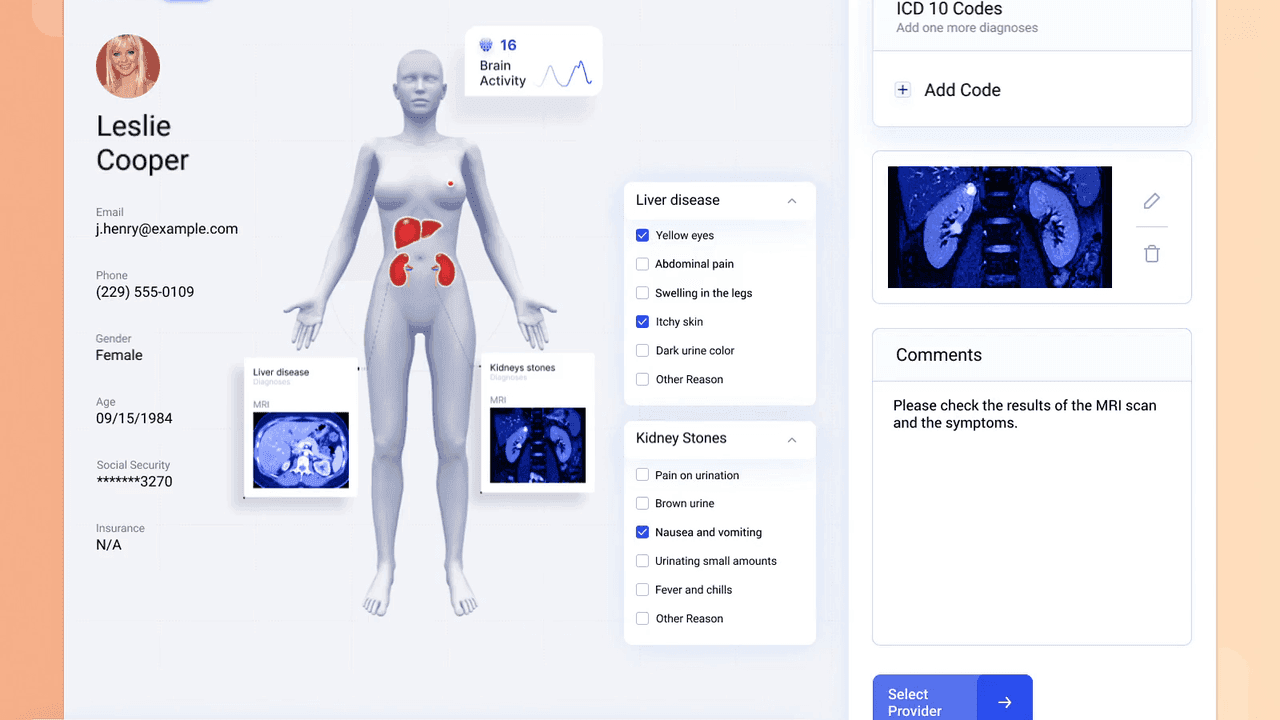
That gap is exactly what we ran into building ReferralMD. The client had already tried building the referral system in-house, and the result was overly complex, with too many screens for a new user to learn without formal training first.
The bigger problem sat underneath the interface itself. The existing referral process for many providers ran on a fragmented mix of systems, databases, and outdated technology, with no single source connecting a referring doctor to the specialist who needed the patient's information quickly. Off-the-shelf referral tools generally assume a cleaner starting point than that one.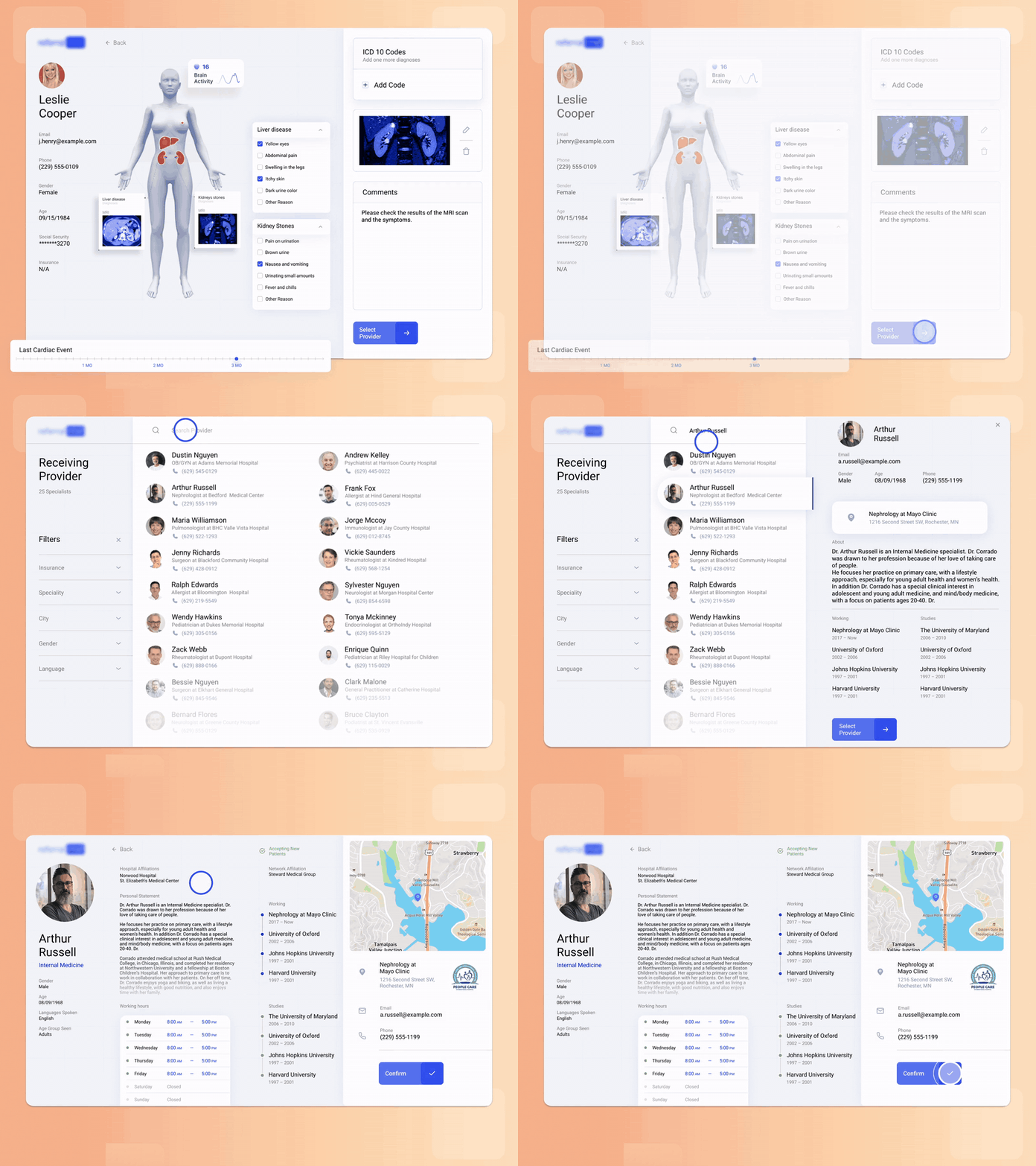
We didn't have a clean starting point to work with on this project, so building custom wasn't really a preference at all. It was the only practical way left to connect systems that were never designed to talk to each other in the first place.
A useful test before committing either way: list every system the new software has to exchange data with. Include the ones nobody thinks of as an integration, like a fax machine still handling half your referrals. A short list with documented APIs favors off-the-shelf. A long list, full of undocumented legacy infrastructure, tends to settle the decision on its own before cost enters the conversation.
That same test cuts both ways. A practice with a modest but well-documented tech stack can sometimes make off-the-shelf work even when the workflow is unusual. The fix is isolating the one gap and handling it manually rather than rebuilding the whole system around it.
Compliance Ownership
Compliance ownership decides who actually answers for a HIPAA gap when one eventually shows up. It's either your own organization directly, or a vendor you're trusting to have already fully solved it somewhere upstream, long before the original contract was ever signed.
An off-the-shelf platform typically bundles compliance into the product itself, which is convenient until something falls outside what the vendor originally built for. At that point you're negotiating a contract amendment instead of shipping a fix, and the timeline stops being yours to control. A custom build puts that responsibility, and that control, back with your own team from day one of the project.
We felt the real weight of that ownership on the e-prescribing platform we built for Moldova's national health insurer. The system had to interface directly with a government payer, so access control, audit logging, and data-handling decisions had to be settled correctly before a single prescription could go through the pipeline.
The build ran seven to eleven months, and most of that time went into the parts a compliance review actually checks rather than the visible product itself. It went live nationally in April 2023, and paper prescriptions for compensated medication stopped almost overnight, with only a few narrow exceptions remaining.
That kind of switch only works when compliance ownership gets designed in from the very start of the build. The honest cost of it is real: owning compliance directly means more work upfront, and more risk if your own team gets a detail wrong somewhere along the way.
It's also the only path available once the software has to answer to a regulator directly. A vendor's shared-responsibility model was written for a much broader use case than the specific one actually being built here, which is exactly where those models tend to leave gaps.
Total Cost Over Five Years
Total cost over five years almost never favors the option that looks cheaper in year one alone. The full billing pattern plays out across the whole five-year contract term, not just the very first invoice you happen to receive.
Off-the-shelf EMR software commonly runs $3,000 to $25,000 in the first year and $2,000 to $15,000 annually after that, according to HIPAA Journal's 2025 cost report, once subscription fees, implementation, and add-on modules are counted together. Multiplied across five years, that ongoing fee can outpace what a custom build would have cost outright, especially once per-provider pricing scales up with headcount.
Custom development doesn't have an equivalent published number, because it isn't sold at a fixed price the way a subscription is. We bill at $25 to $49 an hour, the rate shown on our Clutch profile, and the total depends on scope. What custom removes from the five-year math is the recurring license: once the build is paid for, there's no invoice that grows every time a practice hires another clinician.
Off-the-shelf trades that same risk in the other direction. It offers a lower number today in exchange for a bill that keeps compounding every single year for as long as that original subscription itself keeps running on the books.
Time to Live
Time to live is the one variable where off-the-shelf almost always wins outright, every time. That's worth stating plainly rather than downplaying it inside a framework that is otherwise mostly built to make the case for going custom instead.
A configured off-the-shelf platform can go live in days to a few weeks, since the core workflows already exist and setup is mostly data entry plus staff training on an existing interface. A custom build has to design, test, and harden those workflows first, which stretches the timeline to months, longer with real patient data or a payer integration involved.
That gap is real, and it's the strongest honest argument for choosing off-the-shelf. It applies whenever a practice needs a working system fast and its workflow isn't unusual enough to justify waiting several months for something built entirely from scratch.
Exit and Switching Risk
Exit and switching risk carries less overall weight than the other four variables in most healthcare decisions. It still shapes how well a particular choice ages once the contract itself eventually runs its course a few years down the road.
With off-the-shelf software, your data and workflows live inside someone else's platform for the life of the contract. Leaving usually means a data export, a new vendor agreement, and a retraining period for every staff member who touches the system daily. With a custom build, your organization owns the code and the data model outright, so switching later means choosing a new direction on your own terms.
Custom vs Off-the-Shelf, Side by Side
Laid out together, the five variables above split in a fairly predictable pattern across most real decisions. Custom tends to win wherever the workflow or the compliance load is genuinely unusual, and off-the-shelf tends to win on raw speed and a lower year-one bill.
Variable | Custom | Off-the-Shelf |
| Integration burden | Built to match systems you already have, undocumented ones included | Limited to the vendor's supported integration list |
| Compliance ownership | Sits with your own team from the first line of code | Shared with the vendor, bounded by their contract |
| Total cost (5 years) | Hourly build cost ($25-$49/hr), no recurring per-provider license after | $3,000-$25,000 year one, $2,000-$15,000/year after (HIPAA Journal) |
| Time to live | Months, longer with real patient data or a payer integration | Days to weeks for a standard configuration |
| Exit / switching risk | Your organization owns the code and the data model | A data export and a new contract if you leave |
None of these five rows work in isolation, though. A practice with heavy integration burden but low compliance risk might still lean off-the-shelf, if a vendor's API genuinely covers the gap. The reverse holds just as often for a simple workflow buried in unusual regulatory requirements.
Where Off-the-Shelf Genuinely Wins
A solo practice or small clinic running a fairly standard workflow is the clearest case where off-the-shelf genuinely wins. It wins by a far wider margin than most vendor content selling custom development ever cares to admit openly.
If your patient volume, specialties, and referral patterns look like most other practices your size, a mature EHR or practice management platform has almost certainly already solved your problem. It's been tested against thousands of other clinics and priced for exactly that scale. Building custom for a workflow that isn't actually unique buys a longer timeline and a team to maintain forever, with little to show for it.
The same logic holds when the compliance load is standard rather than unusual. A platform that's already HIPAA-aligned for a typical outpatient practice has done that work once and spread the cost across every customer using it today. Rebuilding that same baseline compliance from scratch, for a workflow that doesn't differ from everyone else's, is money spent proving something nobody actually needed proven.
We'd rather tell a prospective client to buy an existing platform than build them something custom that solves a problem they don't have. That's a more honest answer than most software vendors give, and it's exactly why the benefits of custom healthcare software only show up once a workflow genuinely earns them through real specificity.
A quick way to check this before spending hours on formal analysis: look at three similar practices nearby and see whether a shared platform already serves all three well. If it does, that same platform will likely serve a fourth practice just as well, without months of custom development first.
When Custom Is the Only Real Option
Custom becomes the only real option once the workflow itself doesn't exist anywhere on the market yet, in any form. That's a narrower case than most people assume going in, though a completely real one whenever it actually shows up in practice.
ReferralMD needed doctors and specialists to refer patients across a fragmented mix of legacy systems that were never built to connect. No off-the-shelf tool modeled that exact handoff between two different kinds of providers. Moldova's e-prescribing platform needed to interface directly with a national health insurer and issue legally compensated prescriptions in real time, a workflow no general-purpose EHR vendor has reason to support.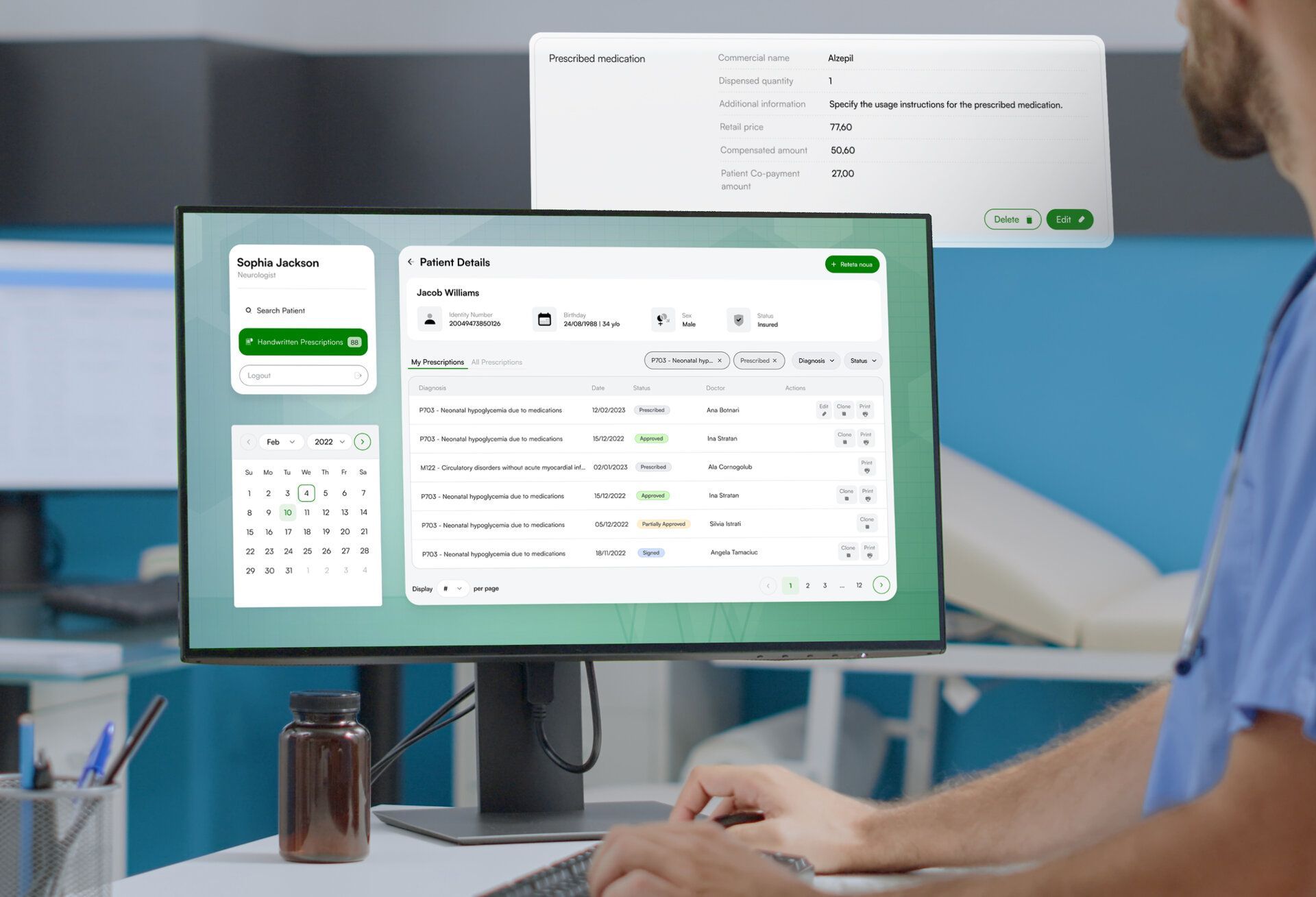
In both cases, the software wasn't solving a common problem slightly differently than a competitor's product would. It was solving a problem that off-the-shelf software was never built to handle at all, for anyone, at any price point.
This same test applies outside healthcare too, though clinical workflows tend to surface it faster than most industries do. A billing system built around a single insurer's paperwork, or a referral network with no shared identifier for patients, rarely exists as a shelf product anyone can simply buy.
The actual test isn't "is our practice special," which almost every practice already believes about itself before looking closely. It's whether the workflow already exists inside a platform built for someone else's practice. Once the honest answer is no, custom healthcare software solutions stop being a preference. They become the only path that actually works.
Neither ReferralMD nor the E-prescribing platform started as a bet on custom for its own sake. Both started as a search for an existing tool that could do the job, and neither team found one that actually fit the workflow already in front of them.
The decision to choose custom vs off the shelf software comes down to two variables: workflow specificity and compliance depth, not budget. A well-funded practice can still lose money on the wrong call here, and a lean one can still make the right one with a clear read on both.
This decision comes up constantly in healthcare software, because clinical workflows are specific enough, and regulated enough, that the wrong choice gets expensive fast. Custom healthcare software development exists for the cases where those two variables genuinely don't line up with what a shared product was ever built to handle, not for every project that simply feels important.
What Actually Decides the Choice
Five factors separate a good decision from an expensive mistake, and they don't carry equal weight in practice. Integration burden and compliance ownership do most of the real work here. Cost, timeline, and exit risk matter too, but they rarely flip the decision on their own once the first two are settled.
Integration Burden
Integration burden is the single biggest driver of whether custom or off-the-shelf makes sense in healthcare software specifically. It's the variable most practices underestimate before they commit to either path and sign a contract they can't easily unwind.
Off-the-shelf tools ship with a fixed list of supported integrations: a handful of labs, a handful of clearinghouses, maybe one or two EHR platforms with a documented API. If your workflow matches that list, integration is close to free. If it doesn't, you're stuck building around the gaps with manual exports, duplicate entry, and a patchwork of point solutions that each add their own failure mode.
That gap is exactly what we ran into building ReferralMD. The client had already tried building the referral system in-house, and the result was overly complex, with too many screens for a new user to learn without formal training first.
The bigger problem sat underneath the interface itself. The existing referral process for many providers ran on a fragmented mix of systems, databases, and outdated technology, with no single source connecting a referring doctor to the specialist who needed the patient's information quickly. Off-the-shelf referral tools generally assume a cleaner starting point than that one.
We didn't have a clean starting point to work with on this project, so building custom wasn't really a preference at all. It was the only practical way left to connect systems that were never designed to talk to each other in the first place.
A useful test before committing either way: list every system the new software has to exchange data with. Include the ones nobody thinks of as an integration, like a fax machine still handling half your referrals. A short list with documented APIs favors off-the-shelf. A long list, full of undocumented legacy infrastructure, tends to settle the decision on its own before cost enters the conversation.
That same test cuts both ways. A practice with a modest but well-documented tech stack can sometimes make off-the-shelf work even when the workflow is unusual. The fix is isolating the one gap and handling it manually rather than rebuilding the whole system around it.
Compliance Ownership
Compliance ownership decides who actually answers for a HIPAA gap when one eventually shows up. It's either your own organization directly, or a vendor you're trusting to have already fully solved it somewhere upstream, long before the original contract was ever signed.
An off-the-shelf platform typically bundles compliance into the product itself, which is convenient until something falls outside what the vendor originally built for. At that point you're negotiating a contract amendment instead of shipping a fix, and the timeline stops being yours to control. A custom build puts that responsibility, and that control, back with your own team from day one of the project.
We felt the real weight of that ownership on the e-prescribing platform we built for Moldova's national health insurer. The system had to interface directly with a government payer, so access control, audit logging, and data-handling decisions had to be settled correctly before a single prescription could go through the pipeline.
The build ran seven to eleven months, and most of that time went into the parts a compliance review actually checks rather than the visible product itself. It went live nationally in April 2023, and paper prescriptions for compensated medication stopped almost overnight, with only a few narrow exceptions remaining.
That kind of switch only works when compliance ownership gets designed in from the very start of the build. The honest cost of it is real: owning compliance directly means more work upfront, and more risk if your own team gets a detail wrong somewhere along the way.
It's also the only path available once the software has to answer to a regulator directly. A vendor's shared-responsibility model was written for a much broader use case than the specific one actually being built here, which is exactly where those models tend to leave gaps.
Total Cost Over Five Years
Total cost over five years almost never favors the option that looks cheaper in year one alone. The full billing pattern plays out across the whole five-year contract term, not just the very first invoice you happen to receive.
Off-the-shelf EMR software commonly runs $3,000 to $25,000 in the first year and $2,000 to $15,000 annually after that, according to HIPAA Journal's 2025 cost report, once subscription fees, implementation, and add-on modules are counted together. Multiplied across five years, that ongoing fee can outpace what a custom build would have cost outright, especially once per-provider pricing scales up with headcount.
Custom development doesn't have an equivalent published number, because it isn't sold at a fixed price the way a subscription is. We bill at $25 to $49 an hour, the rate shown on our Clutch profile, and the total depends on scope. What custom removes from the five-year math is the recurring license: once the build is paid for, there's no invoice that grows every time a practice hires another clinician.
Off-the-shelf trades that same risk in the other direction. It offers a lower number today in exchange for a bill that keeps compounding every single year for as long as that original subscription itself keeps running on the books.
Time to Live
Time to live is the one variable where off-the-shelf almost always wins outright, every time. That's worth stating plainly rather than downplaying it inside a framework that is otherwise mostly built to make the case for going custom instead.
A configured off-the-shelf platform can go live in days to a few weeks, since the core workflows already exist and setup is mostly data entry plus staff training on an existing interface. A custom build has to design, test, and harden those workflows first, which stretches the timeline to months, longer with real patient data or a payer integration involved.
That gap is real, and it's the strongest honest argument for choosing off-the-shelf. It applies whenever a practice needs a working system fast and its workflow isn't unusual enough to justify waiting several months for something built entirely from scratch.
Exit and Switching Risk
Exit and switching risk carries less overall weight than the other four variables in most healthcare decisions. It still shapes how well a particular choice ages once the contract itself eventually runs its course a few years down the road.
With off-the-shelf software, your data and workflows live inside someone else's platform for the life of the contract. Leaving usually means a data export, a new vendor agreement, and a retraining period for every staff member who touches the system daily. With a custom build, your organization owns the code and the data model outright, so switching later means choosing a new direction on your own terms.
Custom vs Off-the-Shelf, Side by Side
Laid out together, the five variables above split in a fairly predictable pattern across most real decisions. Custom tends to win wherever the workflow or the compliance load is genuinely unusual, and off-the-shelf tends to win on raw speed and a lower year-one bill.
Variable | Custom | Off-the-Shelf |
| Integration burden | Built to match systems you already have, undocumented ones included | Limited to the vendor's supported integration list |
| Compliance ownership | Sits with your own team from the first line of code | Shared with the vendor, bounded by their contract |
| Total cost (5 years) | Hourly build cost ($25-$49/hr), no recurring per-provider license after | $3,000-$25,000 year one, $2,000-$15,000/year after (HIPAA Journal) |
| Time to live | Months, longer with real patient data or a payer integration | Days to weeks for a standard configuration |
| Exit / switching risk | Your organization owns the code and the data model | A data export and a new contract if you leave |
None of these five rows work in isolation, though. A practice with heavy integration burden but low compliance risk might still lean off-the-shelf, if a vendor's API genuinely covers the gap. The reverse holds just as often for a simple workflow buried in unusual regulatory requirements.
Where Off-the-Shelf Genuinely Wins
A solo practice or small clinic running a fairly standard workflow is the clearest case where off-the-shelf genuinely wins. It wins by a far wider margin than most vendor content selling custom development ever cares to admit openly.
If your patient volume, specialties, and referral patterns look like most other practices your size, a mature EHR or practice management platform has almost certainly already solved your problem. It's been tested against thousands of other clinics and priced for exactly that scale. Building custom for a workflow that isn't actually unique buys a longer timeline and a team to maintain forever, with little to show for it.
The same logic holds when the compliance load is standard rather than unusual. A platform that's already HIPAA-aligned for a typical outpatient practice has done that work once and spread the cost across every customer using it today. Rebuilding that same baseline compliance from scratch, for a workflow that doesn't differ from everyone else's, is money spent proving something nobody actually needed proven.
We'd rather tell a prospective client to buy an existing platform than build them something custom that solves a problem they don't have. That's a more honest answer than most software vendors give, and it's exactly why the benefits of custom healthcare software only show up once a workflow genuinely earns them through real specificity.
A quick way to check this before spending hours on formal analysis: look at three similar practices nearby and see whether a shared platform already serves all three well. If it does, that same platform will likely serve a fourth practice just as well, without months of custom development first.
When Custom Is the Only Real Option
Custom becomes the only real option once the workflow itself doesn't exist anywhere on the market yet, in any form. That's a narrower case than most people assume going in, though a completely real one whenever it actually shows up in practice.
ReferralMD needed doctors and specialists to refer patients across a fragmented mix of legacy systems that were never built to connect. No off-the-shelf tool modeled that exact handoff between two different kinds of providers. Moldova's e-prescribing platform needed to interface directly with a national health insurer and issue legally compensated prescriptions in real time, a workflow no general-purpose EHR vendor has reason to support.
In both cases, the software wasn't solving a common problem slightly differently than a competitor's product would. It was solving a problem that off-the-shelf software was never built to handle at all, for anyone, at any price point.
This same test applies outside healthcare too, though clinical workflows tend to surface it faster than most industries do. A billing system built around a single insurer's paperwork, or a referral network with no shared identifier for patients, rarely exists as a shelf product anyone can simply buy.
The actual test isn't "is our practice special," which almost every practice already believes about itself before looking closely. It's whether the workflow already exists inside a platform built for someone else's practice. Once the honest answer is no, custom healthcare software solutions stop being a preference. They become the only path that actually works.
Neither ReferralMD nor the E-prescribing platform started as a bet on custom for its own sake. Both started as a search for an existing tool that could do the job, and neither team found one that actually fit the workflow already in front of them.
Frequently Asked Questions

How does the cost of custom vs. off-the-shelf healthcare software compare?
Off-the-shelf EMR software typically runs $3,000 to $25,000 in year one and $2,000 to $15,000 annually after that, per HIPAA Journal. Custom development has no published equivalent since it's billed hourly and scoped per project, but it removes the recurring per-provider license that off-the-shelf carries indefinitely.

When is off-the-shelf healthcare software the right choice?
How does custom software handle EHR integration compared to off-the-shelf tools?
Who owns HIPAA compliance in a custom build versus an off-the-shelf platform?
How much longer does a custom healthcare software build take than off-the-shelf?
What are the switching costs if I want to change systems later?
What counts as custom healthcare software?

Author
Blending business insight with hands-on execution, I lead growth efforts at CorLab Tech by aligning smart strategies with clear results. My focus is on bringing in ideal clients, scaling partnerships, and growing our presence in the tech world.
Every decision is made with intention. It’s about building momentum, creating value, and turning vision into measurable success.


Our Best Insights
Browse More Articles
Want to know what’s trending in the tech world? Our articles break it all down - quickly and clearly.
 Time to read: 11 min

Healthcare

Artificial Intelligence
November 4th, 2024
Machine Learning in Healthcare: Benefits, Use Cases, and Limits
Where machine learning helps in healthcare, why so many projects stall after the pilot, and when a simple rule beats a model.

 Time to read: 5 min
Healthcare
October 3rd, 2024
Digital Transformation in Healthcare: What It Means in Software Terms
From clinics to enterprise systems, digital transformation is making healthcare software more accessible, efficient, and patient-focused.


Thinking about building your own app?
Let's make it happen! Dream big, build smart - we’ll take care of the tech.
 Get a free consultation